
You know that feeling when your brain’s running a million miles an hour and you can’t seem to catch a break? Yeah, me too. I stumbled onto Japanese minimalist practices a few years back, and honestly, they’ve been game-changers for my mental peace.
The Japanese have this amazing ability to find calm in simplicity. It’s not about throwing out everything you own or living in an empty room (though some people do that!). It’s more about creating space—physical and mental—for what truly matters.
I’m going to share 10 practical habits I’ve picked up from Japanese minimalism that you can start using today. No fancy equipment needed, just a willingness to try something different. Ready? 🙂
The Morning Ritual of Organized Simplicity
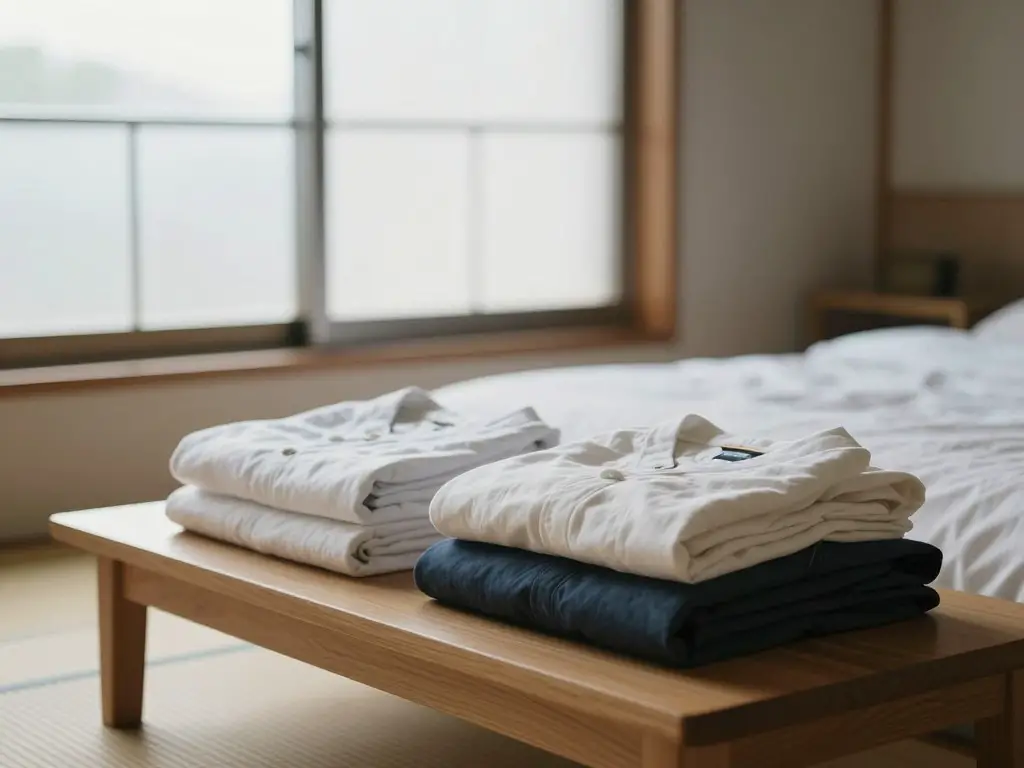
Ever wonder why your mornings feel so chaotic? The Japanese concept of asa no shūkan (morning habits) starts the night before. I used to wake up scrambling, looking for my keys, wondering what to wear, basically starting each day stressed out.
Here’s what changed things for me: I prep everything the night before. Clothes laid out, bag packed, coffee maker ready to go. Sounds simple, right? But this tiny shift means I wake up to order instead of chaos.
The key is creating a morning routine that requires zero decisions. Your brain’s freshest in the morning—why waste that energy deciding between the blue or black shirt? Save that mental bandwidth for stuff that actually matters.
Try this: spend 10 minutes before bed setting up your morning. You’ll thank yourself when your alarm goes off, trust me.
Declutter One Small Space Daily
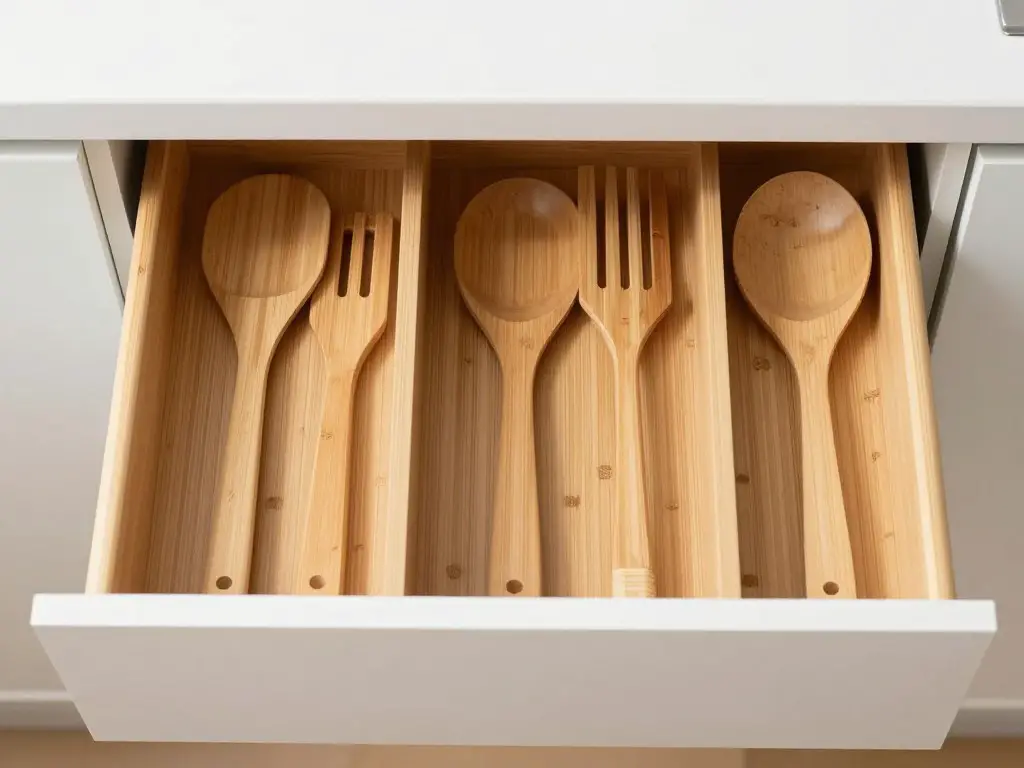
The Japanese practice of danshari isn’t about Marie Kondo-ing your entire house in a weekend (though props if you can!). It’s about consistent, small actions that add up.
I started with one drawer. Just one. Took me maybe 15 minutes. The next day, another drawer. Within a month, my entire bedroom felt different. More breathable. Less overwhelming.
Here’s my approach:
- Pick one tiny area (a shelf, drawer, or corner)
- Remove everything that doesn’t serve a purpose or bring you joy
- Organize what remains with intention
- Move on—don’t obsess over perfection
Your mind mirrors your environment. When you clear physical clutter, you’re literally creating mental space. I can’t explain the science, but I can tell you it works.
Practice Mindful Eating with Hara Hachi Bu
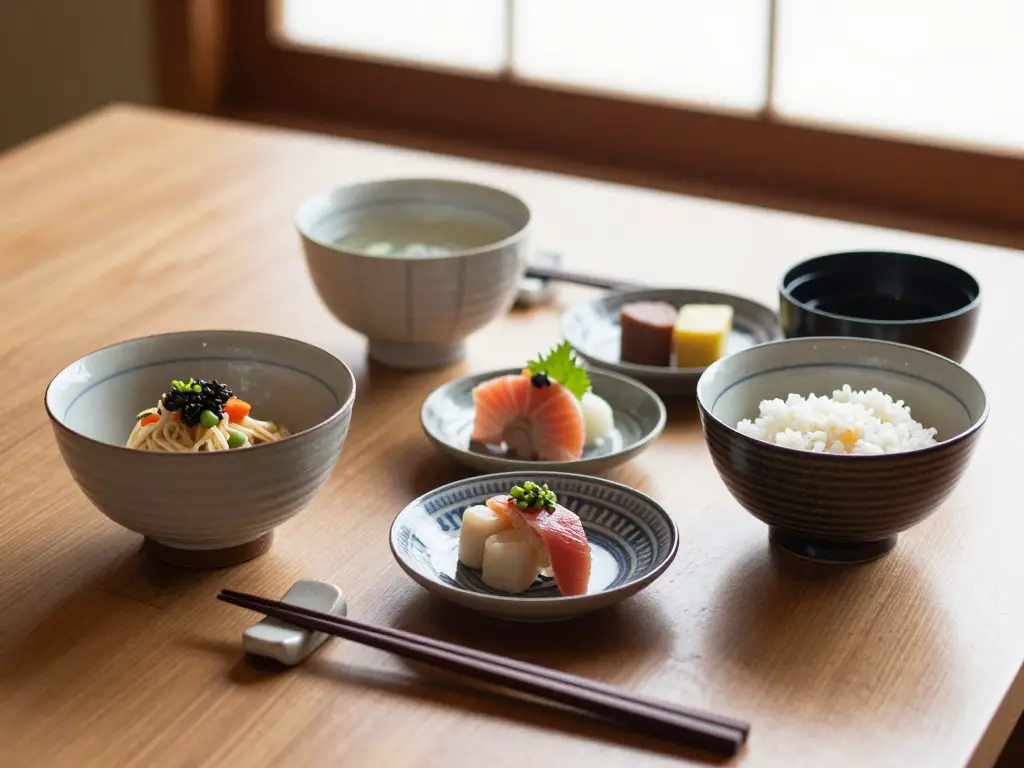
Hara hachi bu is this Okinawan practice that translates to “eat until you’re 80% full.” Sounds weird at first, right? But hear me out.
We’re so conditioned to finish everything on our plates that we’ve lost touch with actual hunger signals. I used to eat until I felt stuffed, then wonder why I was sluggish and irritable all afternoon.
Now I eat slower, put my fork down between bites, and actually check in with my body. Am I still hungry, or am I just eating because it’s there? This simple awareness has changed not just my relationship with food, but my overall mental clarity.
FYI, this isn’t a diet thing—it’s about listening to your body and respecting its signals. Plus, you’ll probably save money on groceries when you’re not overeating. Win-win!
Embrace the Art of Single-Tasking
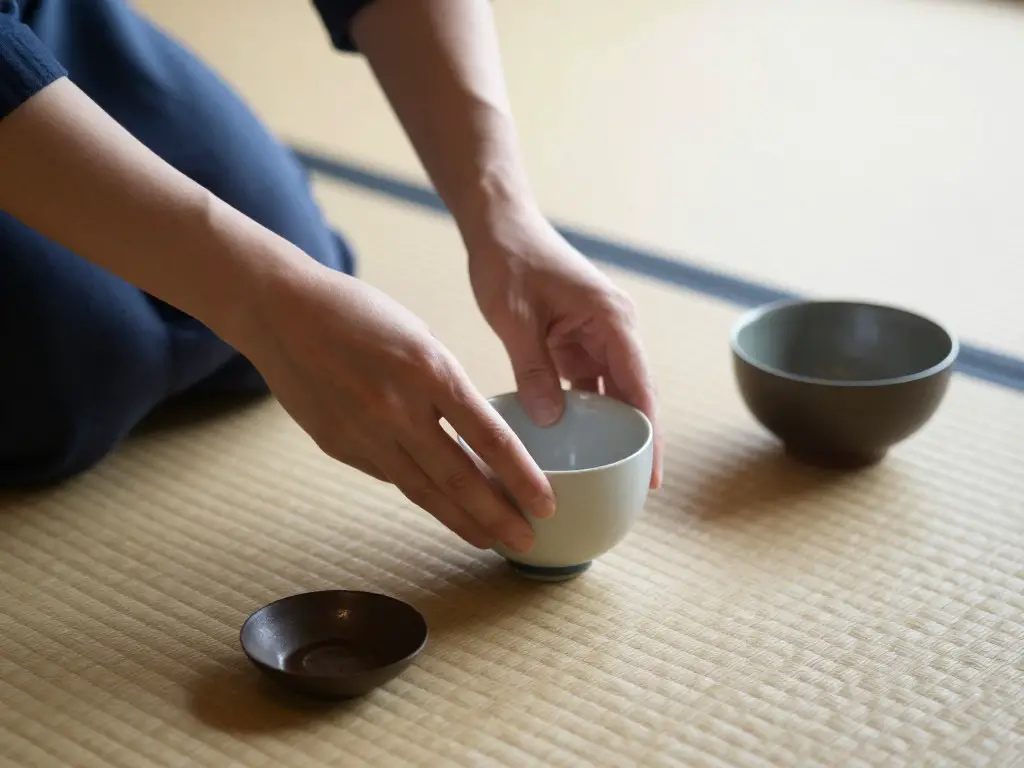
Multitasking is a lie, and the Japanese have known this forever. The concept of ichigyo-zammai means focusing completely on one thing at a time.
I used to wear multitasking like a badge of honor. Answering emails while on calls, eating lunch while working, scrolling Instagram while watching TV. Guess what? I was doing everything poorly and feeling frazzled constantly.
When you wash dishes, just wash dishes. When you walk, just walk. Sounds almost too simple, but this practice has been surprisingly challenging and incredibly rewarding for me.
Your brain isn’t designed to split focus effectively. When you give your full attention to one task, you finish faster, do better work, and actually feel calmer. Try it for just one hour tomorrow—pick one task and commit fully to it.
Create a Technology-Free Evening Routine
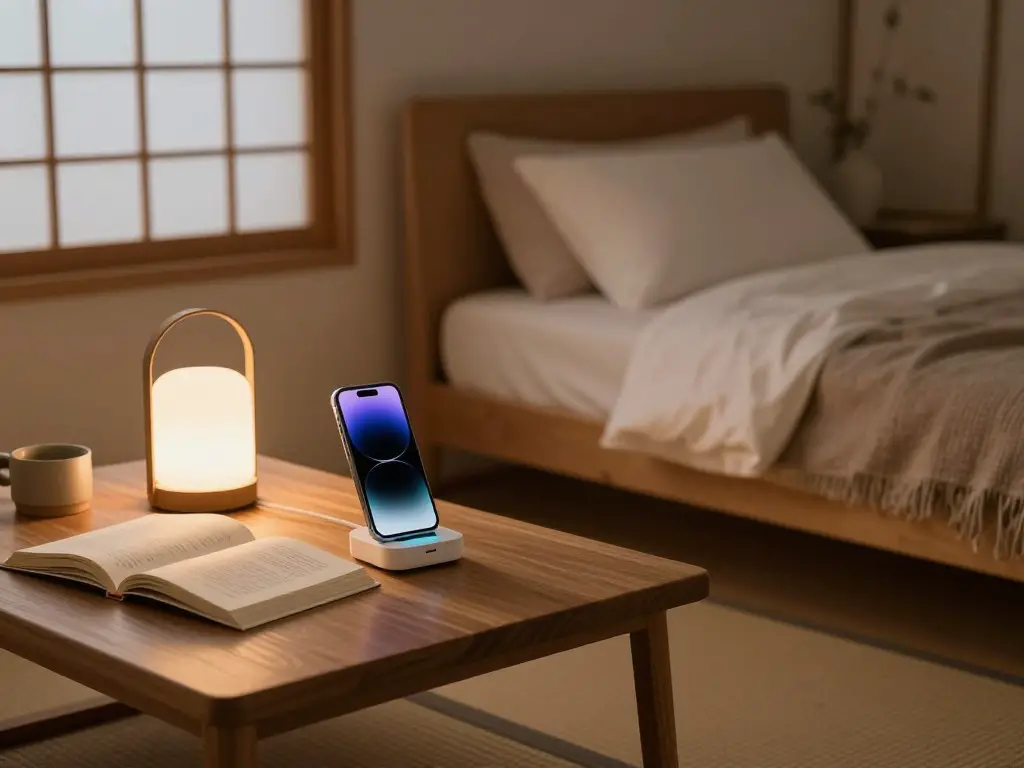
The Japanese concept of ma refers to the space between things—including digital noise. I’ll be honest, this one’s still tough for me, but setting boundaries with technology has massively improved my sleep and mental peace.
I created a rule: no screens for the last hour before bed. Instead, I read, do some light stretching, or just sit quietly. Sounds boring? Maybe. But my mind actually winds down instead of staying wired from blue light and endless scrolling.
Here’s what works for me:
- Set a specific “screen curfew” time
- Charge your phone outside the bedroom
- Replace scrolling with a calming analog activity
- Notice how much better you sleep (seriously, it’s wild)
IMO, our phones are amazing tools but terrible bedtime companions. Give your brain permission to actually rest.
Incorporate Shinrin-Yoku (Forest Bathing) Into Your Week

Shinrin-yoku, or forest bathing, is exactly what it sounds like—immersing yourself in nature. No hiking boots or fitness trackers required. Just you, trees, and intentional presence.
I live in a city, so I’m not exactly surrounded by forests. But I found a park with some decent tree coverage, and I go there weekly. Twenty minutes of walking slowly, breathing deeply, and noticing the natural world around me.
The science backs this up (Japanese researchers have studied it extensively), but you don’t need studies to feel the difference. Nature genuinely calms your nervous system in ways a gym workout or meditation app can’t quite replicate.
Can’t access a forest? Any green space works. The point is getting outside, slowing down, and connecting with something bigger than your to-do list.
Practice Wabi-Sabi Acceptance
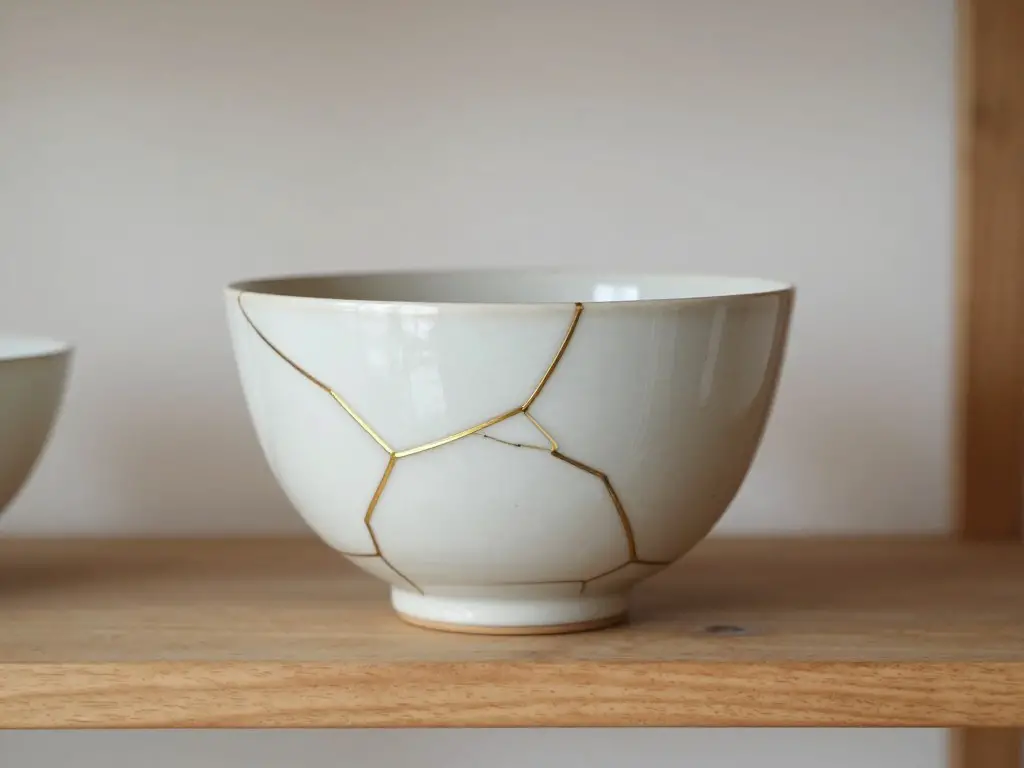
Wabi-sabi is the Japanese philosophy of finding beauty in imperfection. Cracked pottery? Beautiful. Aging wood? Gorgeous. Your messy, imperfect life? Also beautiful.
This mindset shift has probably done more for my mental peace than any other practice. I spent years trying to make everything perfect—my work, my home, myself. Exhausting doesn’t even begin to describe it :/
Now when something breaks or doesn’t go as planned, I try to find the wabi-sabi in it. That coffee stain on my favorite notebook? It’s part of the story now. The wrinkles appearing on my face? Evidence of a life lived.
Perfectionism steals joy and creates constant anxiety. Wabi-sabi gives you permission to be human. Try embracing one “imperfect” thing about yourself or your life today. See how it feels.
Adopt the 'One In, One Out' Rule

This Japanese minimalist principle is straightforward: when you bring something new into your home, something old leaves. Sounds strict? Maybe. But it’s been a sanity-saver for me.
I used to accumulate stuff constantly. New shirt? Great, add it to the overflowing closet. New book? Sure, squeeze it onto the already-packed shelf. My space felt cluttered, and so did my mind.
Now, before buying anything, I ask myself what I’m willing to let go. This simple question makes me way more intentional about purchases. Do I really need another coffee mug, or am I just bored and scrolling Amazon?
Benefits I’ve noticed:
- Less impulse buying (my bank account thanks me)
- More appreciation for what I own
- Consistent decluttering without major purges
- A home that feels spacious and breathable
Cultivate Gratitude Through Okagesama

The Japanese expression okagesama de roughly translates to “I am what I am because of you.” It’s this beautiful recognition that nothing we have or achieve happens in isolation.
I started keeping a simple gratitude practice inspired by this concept. Each evening, I think of three specific people or things that helped my day happen. Not generic stuff like “I’m grateful for my health,” but specific moments.
Like, “I’m grateful the barista remembered my order this morning,” or “I appreciate that my coworker covered that meeting so I could handle my emergency.” This specificity makes gratitude feel real, not performative.
When you recognize how interconnected everything is, complaints and frustrations shrink. Your perspective shifts from what’s lacking to what’s abundant. And that shift? That’s where calm lives.
End Your Day with Reflection and Reset
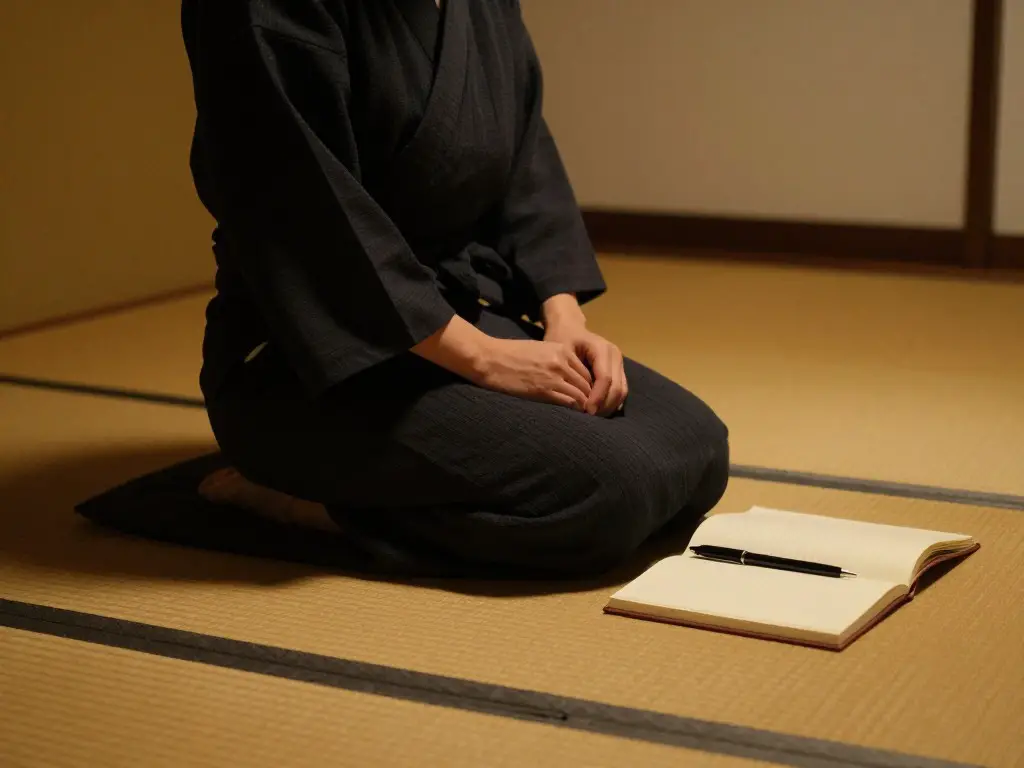
The Japanese concept of hansei means reflection and improvement. Not in a harsh self-critical way, but as gentle daily recalibration.
I spend five minutes before bed doing a simple mental review: What went well today? What could I do differently tomorrow? What am I carrying that I need to release before sleeping?
This isn’t about dwelling on mistakes or beating yourself up. It’s about intentionally closing one chapter before starting the next. Otherwise, yesterday’s stress bleeds into tomorrow, and you’re stuck in this exhausting cycle.
I also do a quick physical reset—tidying the main living space so I wake up to order. Five minutes of putting things back where they belong saves me from morning stress.
Your mind needs closure just like your computer needs to shut down properly. Give yourself that gift each night. You deserve it.
Look, I’m not going to pretend that adopting these Japanese minimalist habits will instantly solve all your problems or turn you into some zen master overnight. That’s not how life works, and that’s okay.
What I can tell you from personal experience is that these practices create space—physical, mental, and emotional space—for calm to actually exist. In our overstuffed, overcommitted, over-stimulated lives, that space is revolutionary.
You don’t need to adopt all ten habits at once (please don’t—that’s the opposite of minimalism!). Pick one that resonates with you. Try it for a week. See how it feels. Then maybe add another.
Small, consistent changes always beat dramatic overhauls. The Japanese have understood this for centuries, and it’s probably why their approach to minimalism feels so sustainable and calming rather than restrictive.
Which habit will you try first? I’d love to know. Here’s to quieter minds and simpler days ahead. You’ve got this! 🙂