
There’s something almost magical about stepping into a Japanese minimalist living room. The calm washes over you instantly—no clutter fighting for your attention, no overwhelming colors, just pure, intentional peace. I’ve been obsessed with Japanese interior design minimalist principles for years, and honestly, once you understand the “why” behind it, you’ll never look at your living room the same way.
Whether you’re working with a Japanese style apartment or just want to bring that serene vibe into your current space, these ideas will help you create a room that actually feels like a sanctuary. And the best part? You don’t need to gut your entire home or spend a fortune. Let’s explore how to bring authentic Japanese minimalist home design into your life.
1. Embrace the Ma Concept: Space as a Design Element
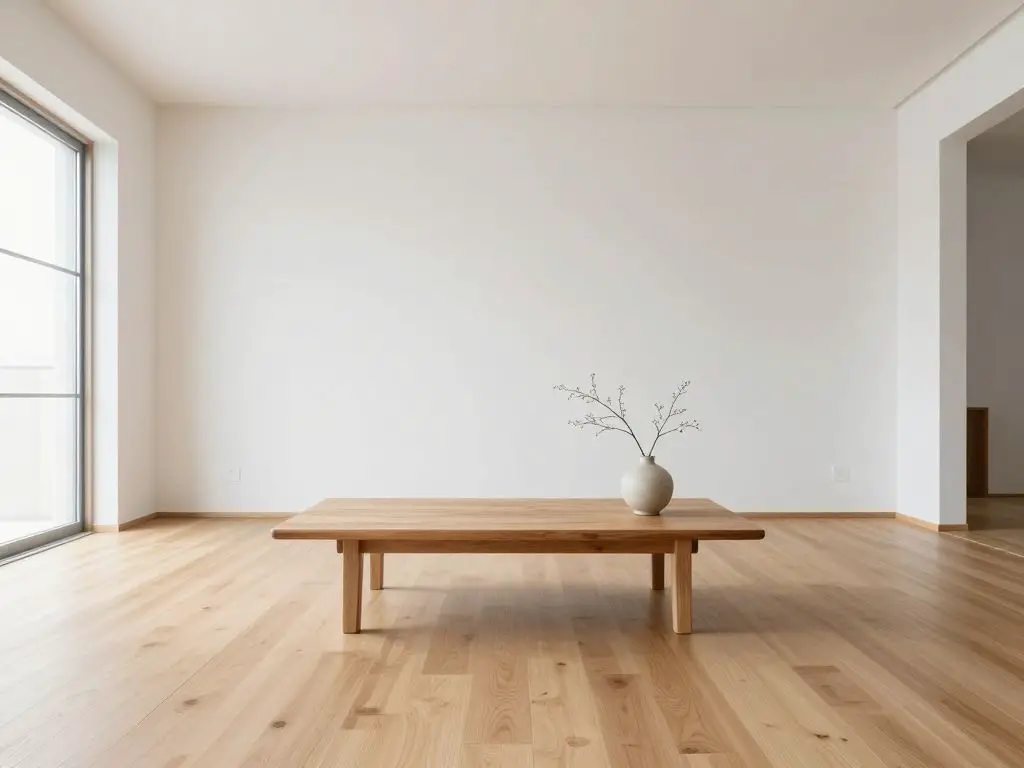
In Japanese design, “ma” refers to negative space, and it’s treated with the same importance as the furniture itself. This isn’t just about having less stuff—it’s about intentionally creating breathing room that lets your mind rest.
Start by removing at least 30% of what’s currently in your living room. I know that sounds intense, but you’d be surprised how liberating it feels. Keep only what serves a clear purpose or brings you genuine joy.
Position your furniture with generous space around each piece. That sofa doesn’t need to be shoved against the wall, and your coffee table can stand alone without being surrounded by side tables and ottomans.
2. Choose Low-Profile Furniture for Grounded Energy
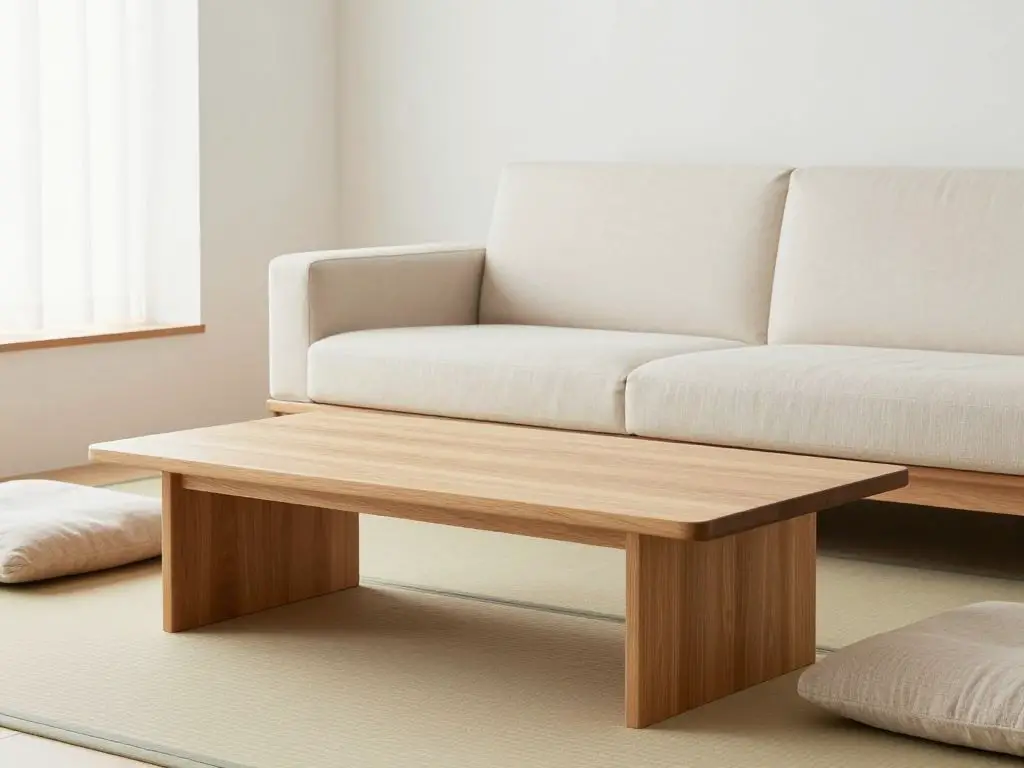
Traditional Japanese homes feature furniture that sits close to the floor, and there’s actual wisdom behind this. Lower furniture creates a visual sense of spaciousness and promotes a grounded, calm feeling in the room.
Look for:
- Platform sofas or low-slung sectionals
- Coffee tables under 16 inches high
- Floor cushions or zabuton for additional seating
- Low media consoles instead of tall entertainment centers
This doesn’t mean you need to sit on the floor (though floor seating can be surprisingly comfortable). Even modern pieces with lower profiles will transform the energy of your space.
3. Stick to a Neutral, Nature-Inspired Color Palette
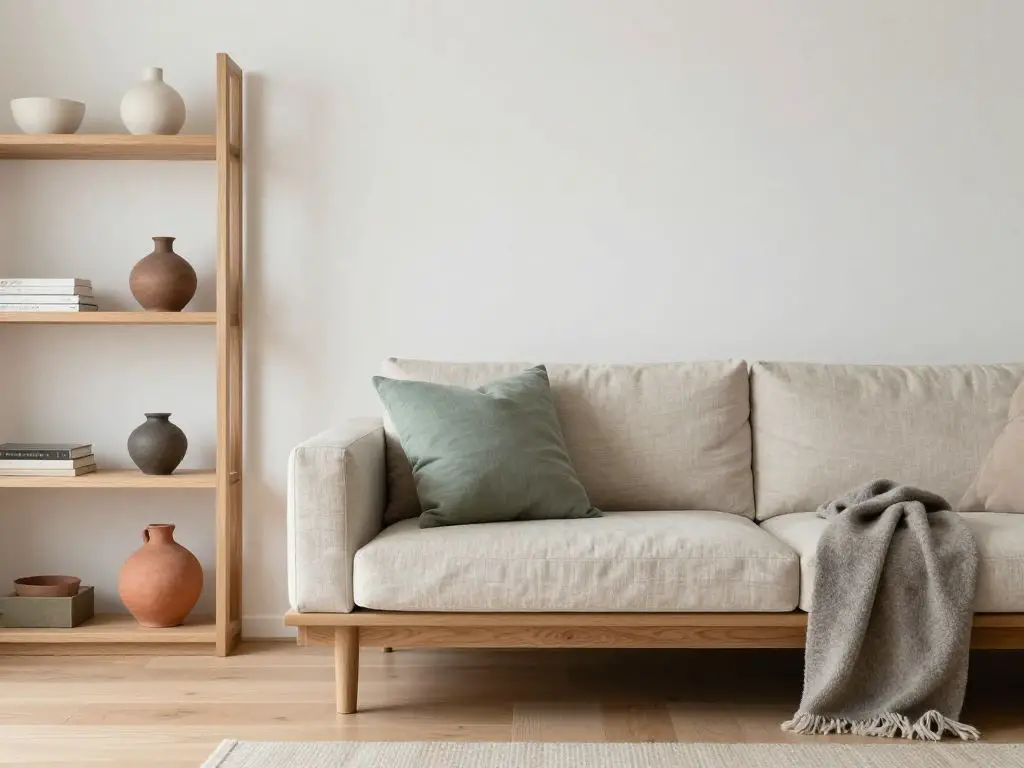
Walk into any authentic Japanese minimalist living room and you’ll notice the colors mirror nature: warm woods, soft whites, earthy grays, and muted greens. This palette isn’t boring—it’s deliberately calming and timeless.
Your base should be neutral: whites, beiges, or soft grays for walls and larger furniture pieces. Then layer in natural wood tones through flooring, shelving, or accent furniture.
If you need color (and honestly, a pop here and there keeps things from feeling sterile), pull from nature: sage green, clay terracotta, or deep charcoal. I’ve found that keeping 80% neutral and 20% natural accent colors hits the sweet spot.
4. Incorporate Natural Materials and Textures
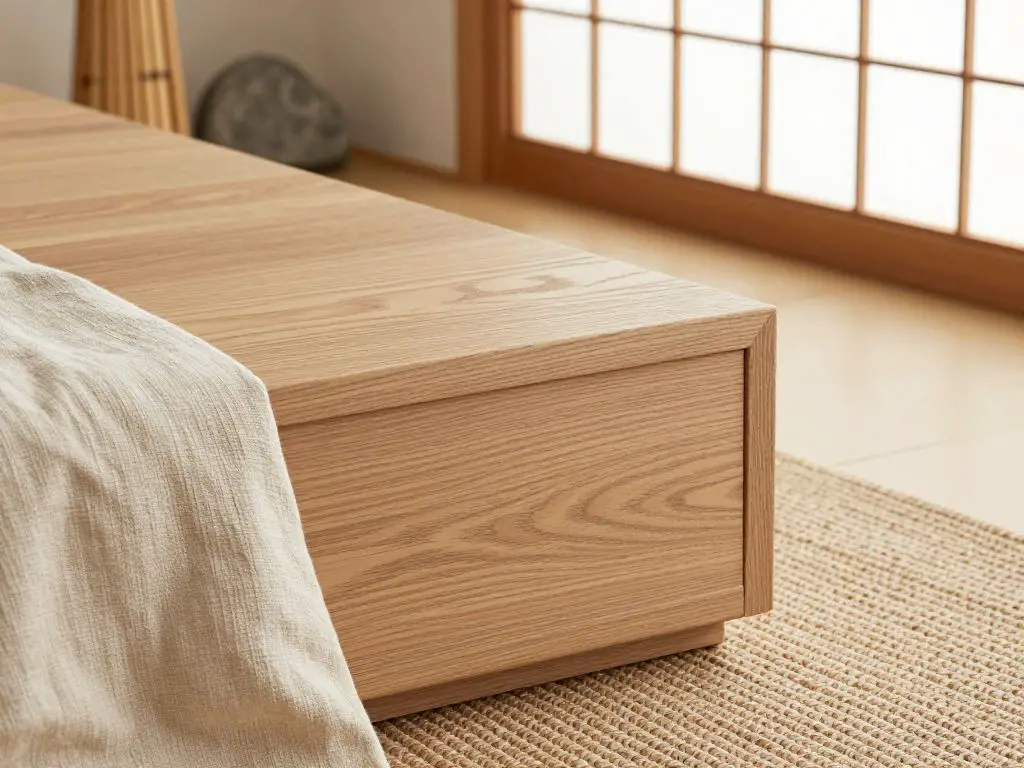
Synthetic materials have no place in a Japanese minimalist home. The Japanese have always celebrated the beauty of natural materials, and this connection to nature is essential for creating that signature calm.
Focus on incorporating:
- Wood (especially light woods like oak, ash, or bamboo)
- Stone or concrete elements
- Linen and cotton textiles
- Woven grasses like tatami or jute
- Paper (think shoji screens or rice paper lamps)
Each material should be left as natural as possible. That means wood with visible grain, linen that wrinkles beautifully, and stone that shows its natural variations.
5. Maximize Natural Light with Minimal Window Treatments
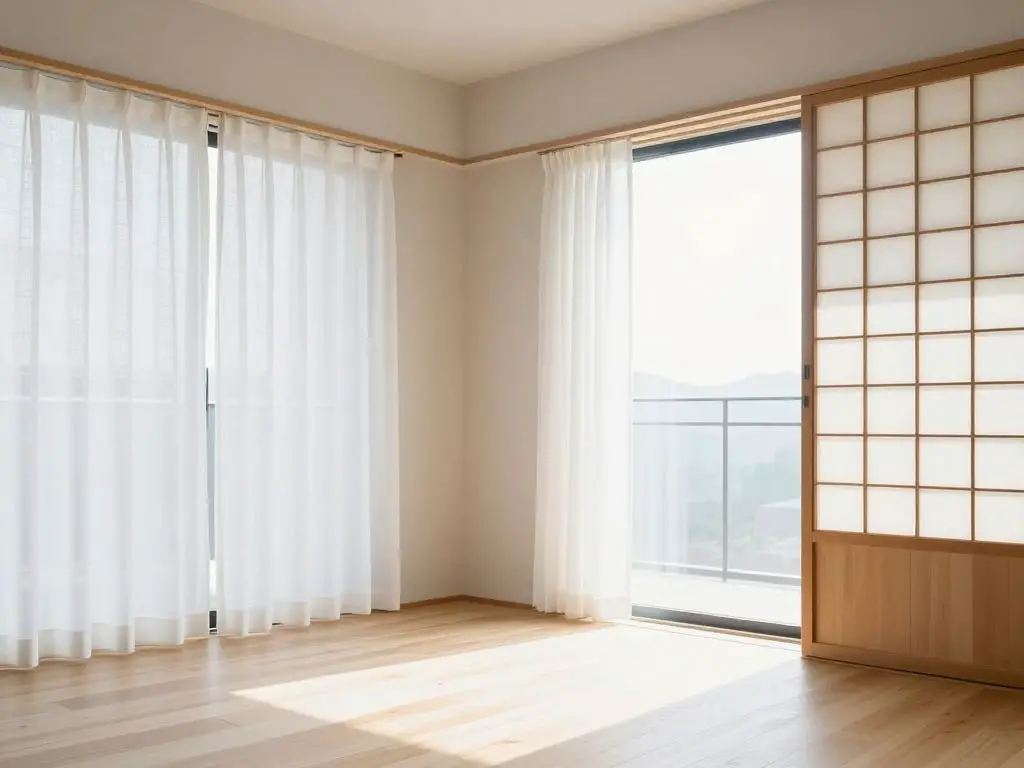
Light is treated almost reverently in Japanese interior design minimalist spaces. The goal is to let natural light flow freely while maintaining privacy when needed.
Ditch heavy curtains and opt for simple, functional window treatments. Shoji screens are the traditional choice and they diffuse light beautifully while offering privacy. If that’s too traditional for your taste, try lightweight linen curtains in white or cream, or simple roller shades in natural fabrics.
Keep windows unobstructed as much as possible. That means no tchotchkes on the windowsill and furniture positioned to complement, not block, natural light sources.
6. Create a Tokonoma-Inspired Focal Point
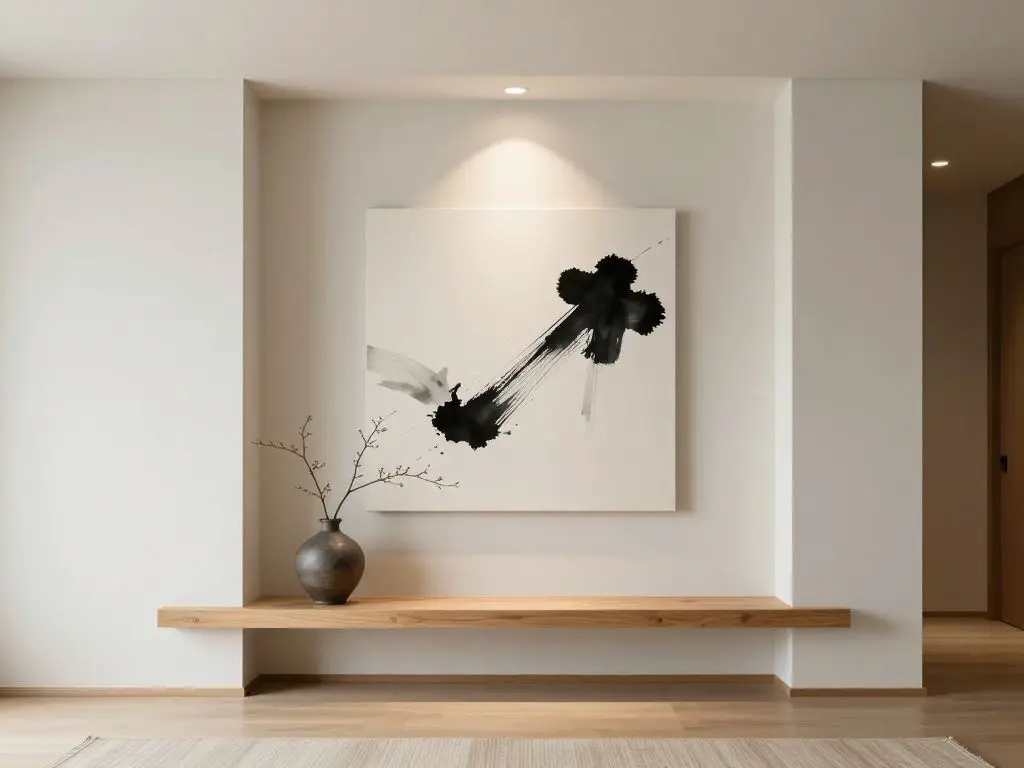
The tokonoma is a traditional Japanese alcove where a single piece of art or seasonal arrangement is displayed. You can adapt this concept by creating one intentional focal point in your living room.
Choose a single wall or corner and display one meaningful item: a piece of art, a sculptural vase, or a beautiful plant. Change it seasonally to keep the space feeling fresh and connected to nature’s rhythms.
The key is restraint. One perfect thing beats five mediocre things every single time. I rotate my focal pieces quarterly, and it keeps me connected to my space in a way that permanent decor never did.
7. Adopt the Japandi Small Living Room Approach
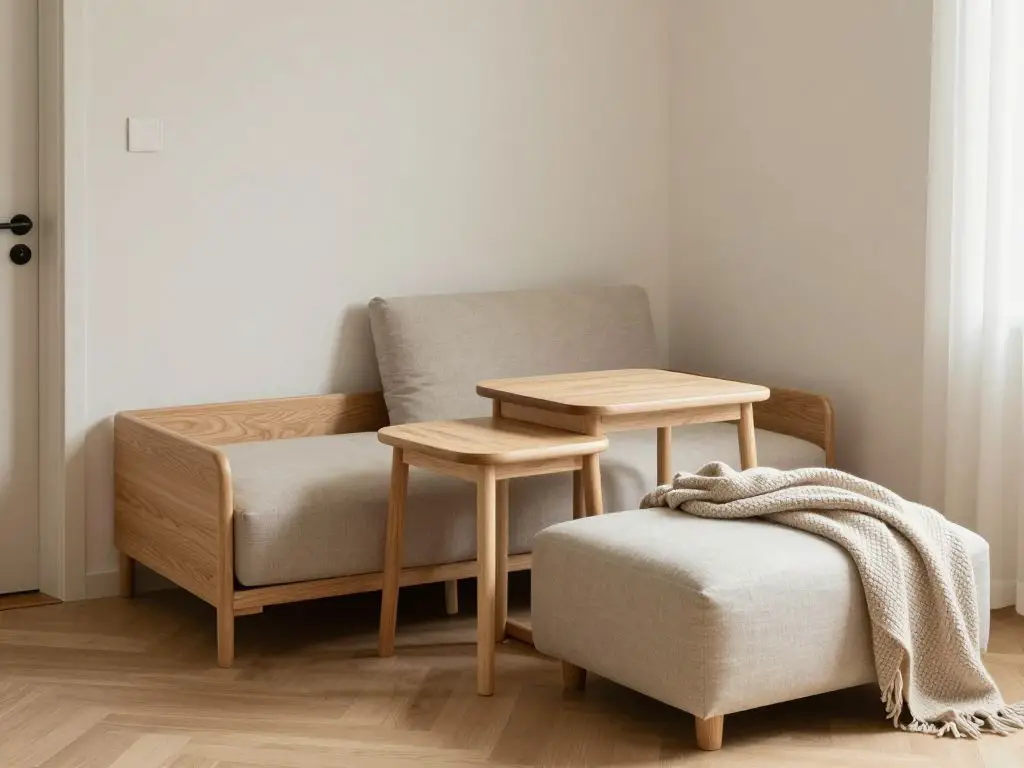
If you’re working with limited space, the Japandi small living room aesthetic is your best friend. This fusion of Japanese minimalism and Scandinavian functionality is perfect for making small spaces feel larger and more livable.
Key Japandi principles include:
- Multi-functional furniture (storage ottomans, nesting tables)
- Clean lines without ornate details
- Hygge coziness balanced with Japanese restraint
- Quality over quantity in every purchase
The Scandinavian influence adds a touch more warmth and texture than pure Japanese minimalism, which can feel especially welcome in smaller spaces where you’re spending lots of time.
8. Incorporate Greenery Mindfully
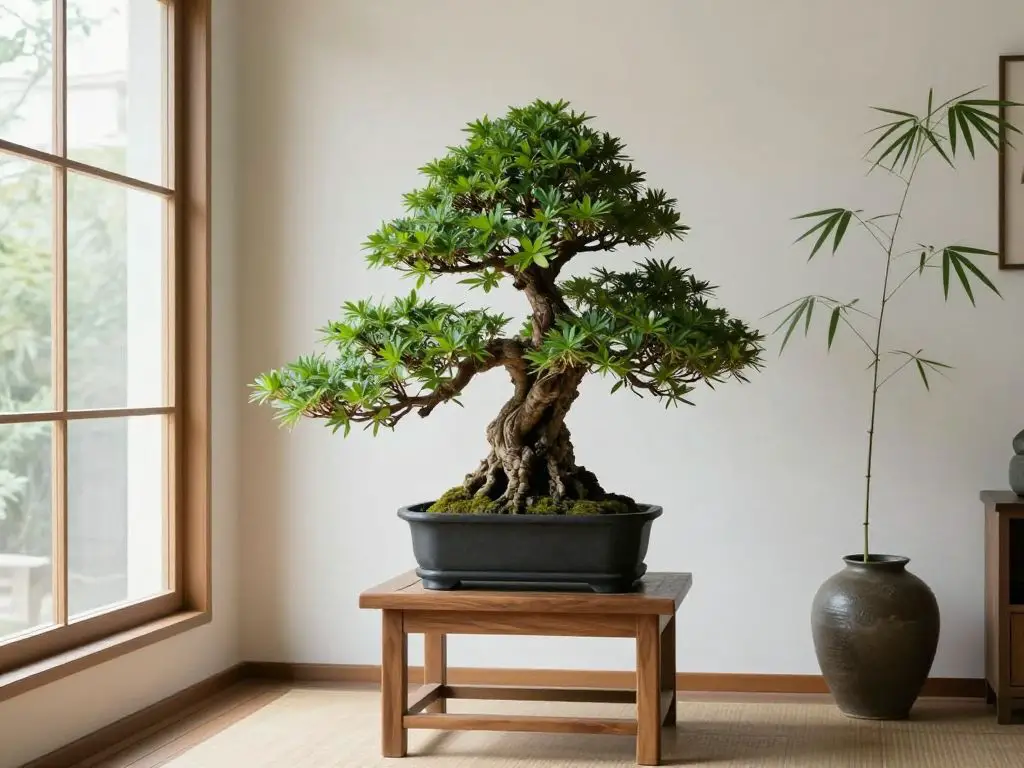
Plants bring life and purify air, but in a Japanese minimalist living room, you won’t see jungle vibes. Instead, plants are chosen carefully and displayed with intention.
Opt for one or two statement plants rather than a collection. Bonsai trees are traditional, but you can also use bamboo, peace lilies, or snake plants. Display them in simple, beautiful planters—ceramic pots in neutral tones or natural materials like wood or stone.
The arrangement matters too. A single branch in a tall vase can be more impactful than a fully leafed-out plant. This is where the Japanese art of ikebana (flower arranging) comes in handy, even if you’re just working with grocery store blooms.
9. Hide Technology and Clutter with Smart Storage
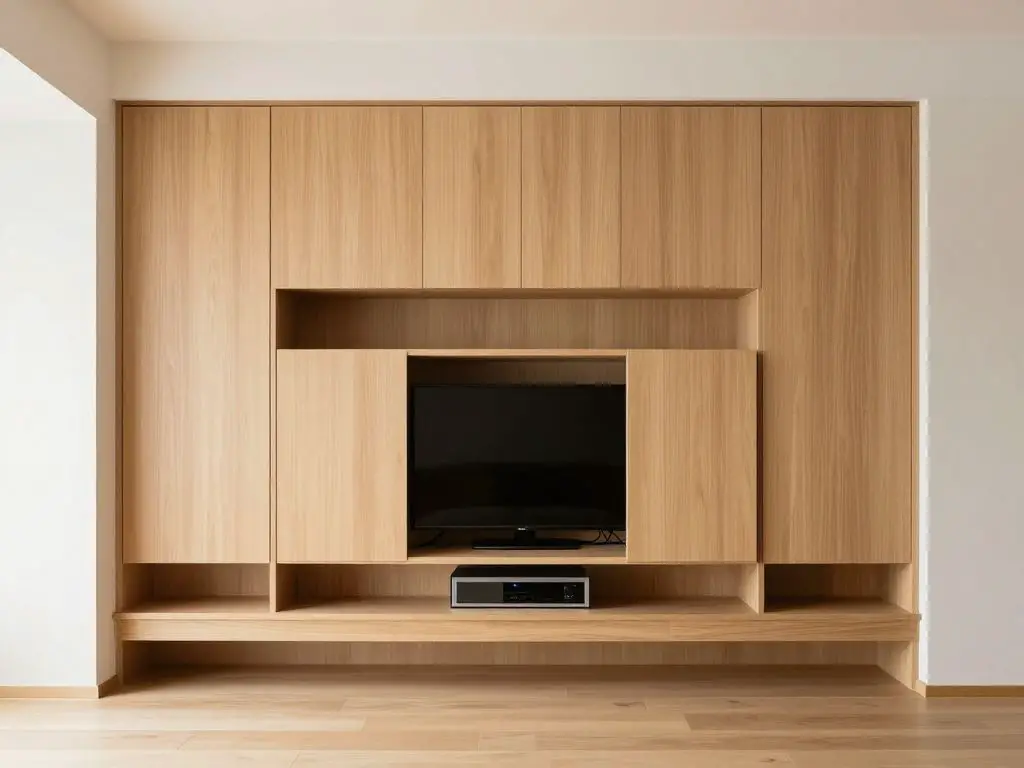
Nothing kills the Zen vibe faster than visible cords, remote controls, and random stuff piling up. Japanese design solves this with concealed storage that’s both beautiful and functional.
Invest in closed storage solutions: cabinets with clean facades, storage benches, or minimalist media consoles with doors. Everything should have a designated home, and when not in use, it should be out of sight.
For technology, mount your TV if possible and hide cords with cable management systems. Better yet, consider a cabinet that allows you to completely conceal the TV when not in use. I installed one last year and the difference it makes when I’m reading or meditating in that space is incredible.
Consider a charging station in a drawer or cabinet where all devices live when not in use. Your living room should support rest and connection, not scrolling and screen time.
Conclusion
Creating a Japanese minimalist living room isn’t about following rigid rules or achieving some Pinterest-perfect aesthetic. It’s about designing a space that supports calm, intention, and presence in your daily life.
Start with one or two of these ideas that resonate most with you. Maybe it’s clearing out that clutter, or finally replacing that bulky entertainment center with something lower and cleaner. The beauty of this approach is that each small change compounds, gradually transforming your space into somewhere you actually want to spend time.
Your living room should feel like a deep breath. Now you’ve got the tools to make that happen.