
If you’ve been scrolling through design inspiration lately, you’ve probably noticed Japandi style taking over—and for good reason. This beautiful blend of Japanese minimalism and Scandinavian functionality creates dining spaces that feel both serene and livable. I fell hard for this aesthetic when I realized it’s basically permission to keep things simple without sacrificing warmth.
The magic of a Japandi dining room lies in its balance. You get clean lines and uncluttered surfaces, but with natural textures and earthy tones that make the space feel inviting rather than cold. Whether you’re working with a formal dining room or a small breakfast nook, these 15 ideas will help you create a space that’s equal parts calm and stylish.
Ready to transform your dining area into a minimalist haven? Let’s explore how to nail that perfect Japandi vibe.
1. Warm Wood Japandi Dining Room with Shoji Screens
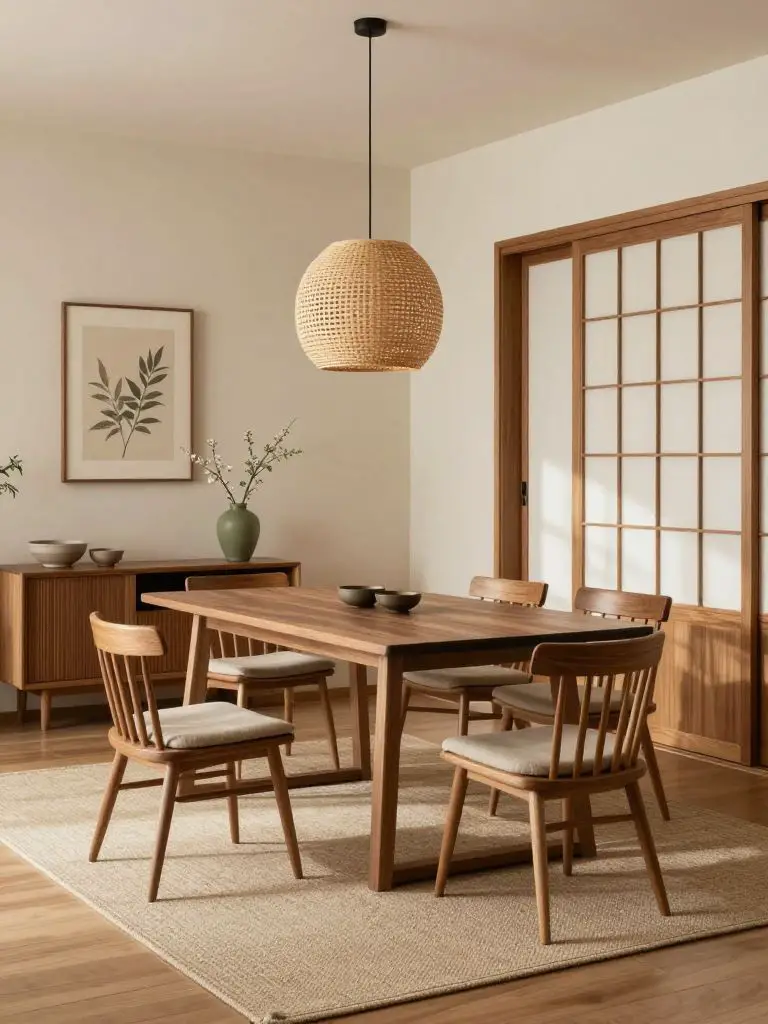
Shoji screens are the ultimate Japandi move for adding privacy and visual interest without overwhelming your space. These translucent rice paper panels filter light beautifully while creating subtle room division. I love how they bring that authentic Japanese element into the room without feeling like a theme restaurant.
Pair your shoji screens with a Japandi dining table in warm oak or walnut. The wood grain adds texture and keeps the space from feeling too stark. Choose chairs with clean lines but cushioned seats—comfort matters when you’re going minimal.
Keep the color palette soft with cream walls and natural fiber accents. A simple ceramic vase with a single branch is all the decoration you need here.
2. Light-Filled Japandi Dining Room with Oversized Paper Lantern
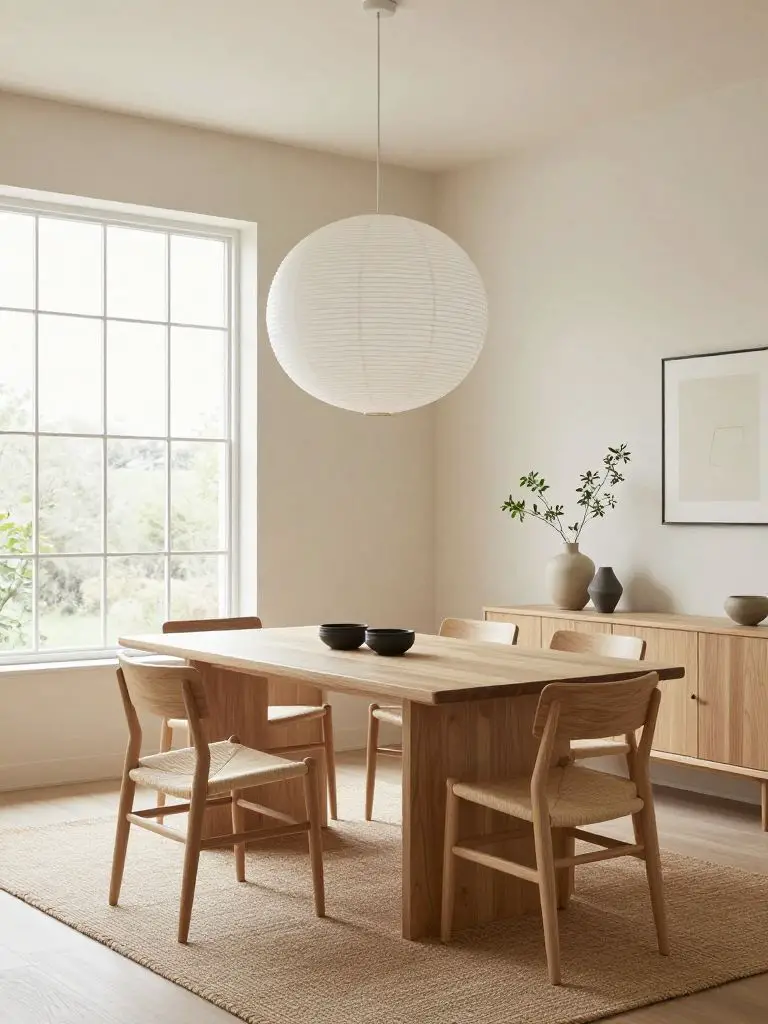
Nothing says Japandi quite like a large paper lantern hanging above your dining table. These sculptural lights cast the most gorgeous diffused glow that makes every meal feel special. The oversized scale adds drama while staying true to minimalist principles.
Position your Japandi dining room table near large windows to maximize natural light during the day. The interplay between sunlight and your pendant creates beautiful shadows that change throughout the day.
Stick with light wood furniture and keep window treatments minimal—maybe linen curtains or nothing at all if privacy allows. The goal is letting that natural light do the heavy lifting in your design.
3. Cozy Corner Minimalist Japandi Breakfast Nook
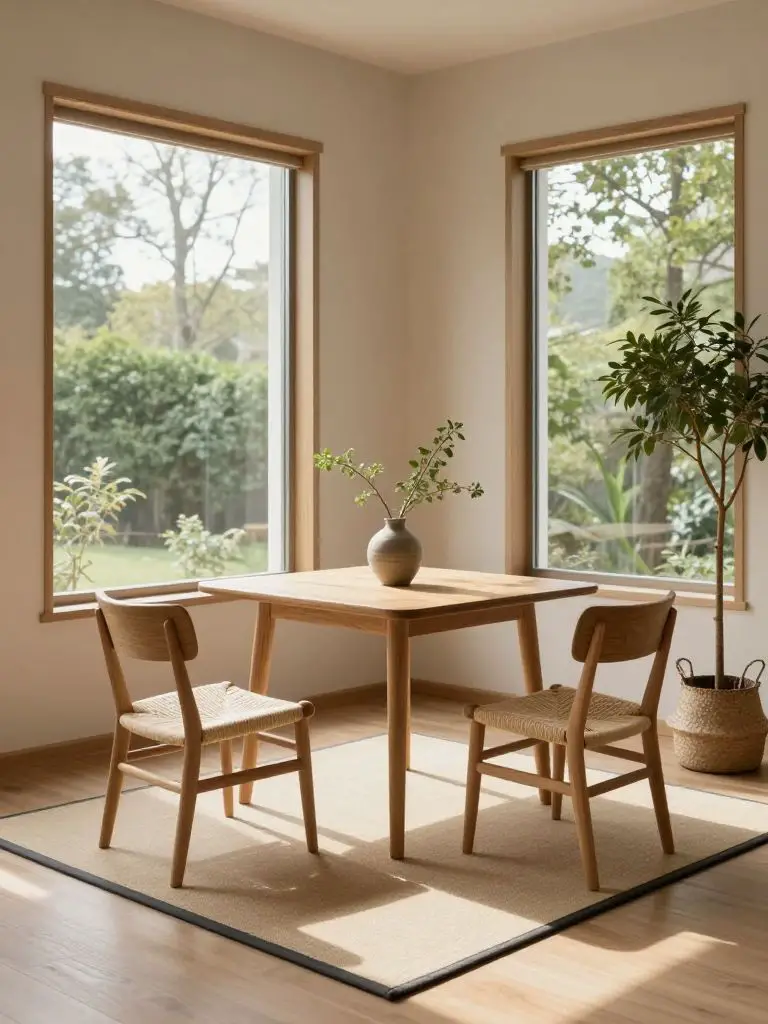
Who says Japandi only works in large spaces? A corner breakfast nook is perfect for this style because it forces you to edit ruthlessly. I actually think smaller spaces often nail the aesthetic better because there’s no room for clutter.
Choose a round or small rectangular table that fits your corner without crowding it. Built-in benches with slim cushions in natural linen or cotton keep things streamlined. Add a single wall-mounted shelf for your coffee essentials.
The key here is making your minimal dining room feel intentional rather than cramped. Use light colors, incorporate one low-maintenance plant, and keep the table clear except during meals.
4. Modern Japandi Dining Room with Wood Slat Ceiling
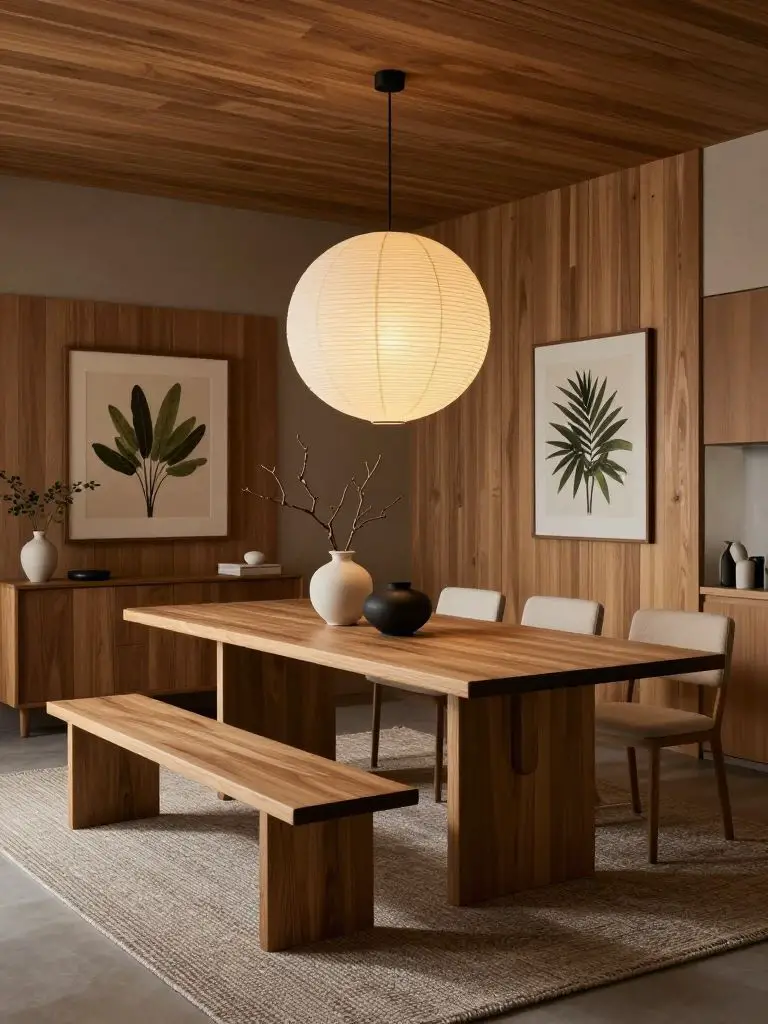
A wood slat ceiling is architectural eye candy that adds warmth overhead without cluttering your walls or floor. This feature draws the eye up and creates visual rhythm that feels both modern and organic.
Keep your furniture low and simple to let the ceiling be the star. A sleek Japandi dining area with streamlined chairs and a simple table base works perfectly here. The contrast between the detailed ceiling and minimal furniture creates that sweet spot of interest without chaos.
Paint your walls in a soft greige or warm white to bridge the wood tones with Scandinavian brightness. Add pendant lights that hang at varying heights for layered illumination.
5. Soft Neutral Japandi Bistro-Style Dining Setup
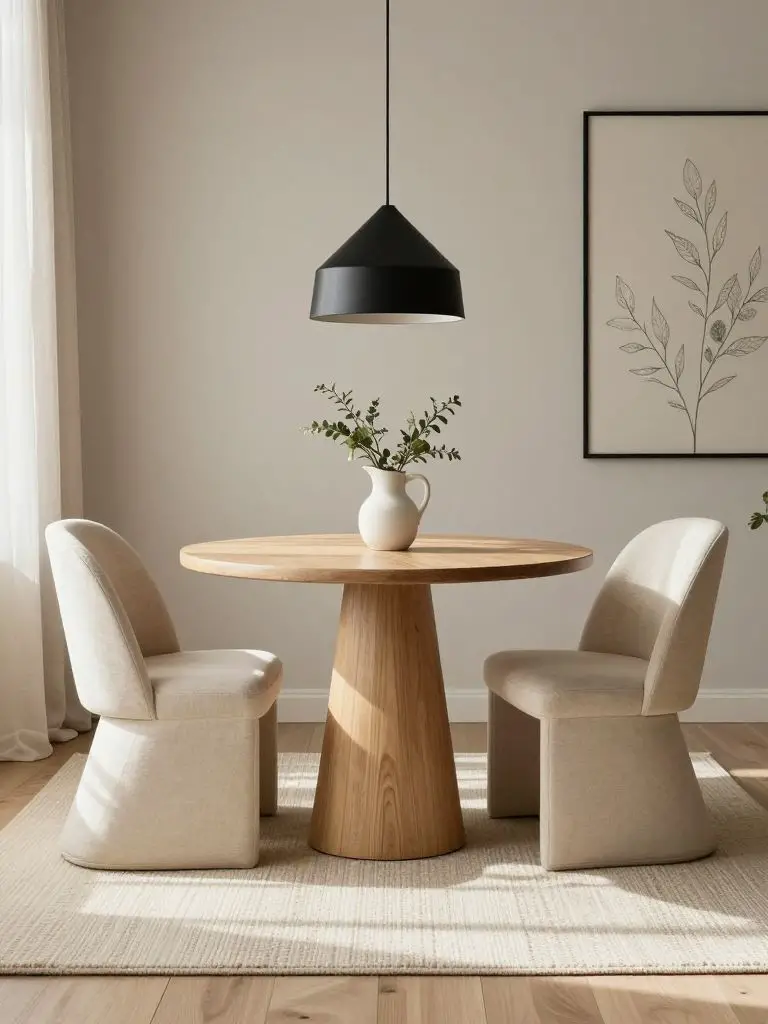
Bistro-style dining brings an intimate, cafe-inspired vibe to your Japandi space. Think smaller scale furniture with refined details—perfect if you’re working with limited square footage or want a more casual dining experience.
A pedestal bistro table in light wood paired with two sculptural chairs creates a conversation spot that doesn’t dominate the room. This setup works beautifully in open-concept spaces where your dining area flows into your living room.
Layer in soft textiles through chair cushions or a runner in muted beige, sand, or soft gray. The bistro approach keeps your Japandi Scandinavian interior feeling approachable and perfect for everyday use.
6. Airy Open-Concept Japandi Dining Room with Indoor-Outdoor Flow
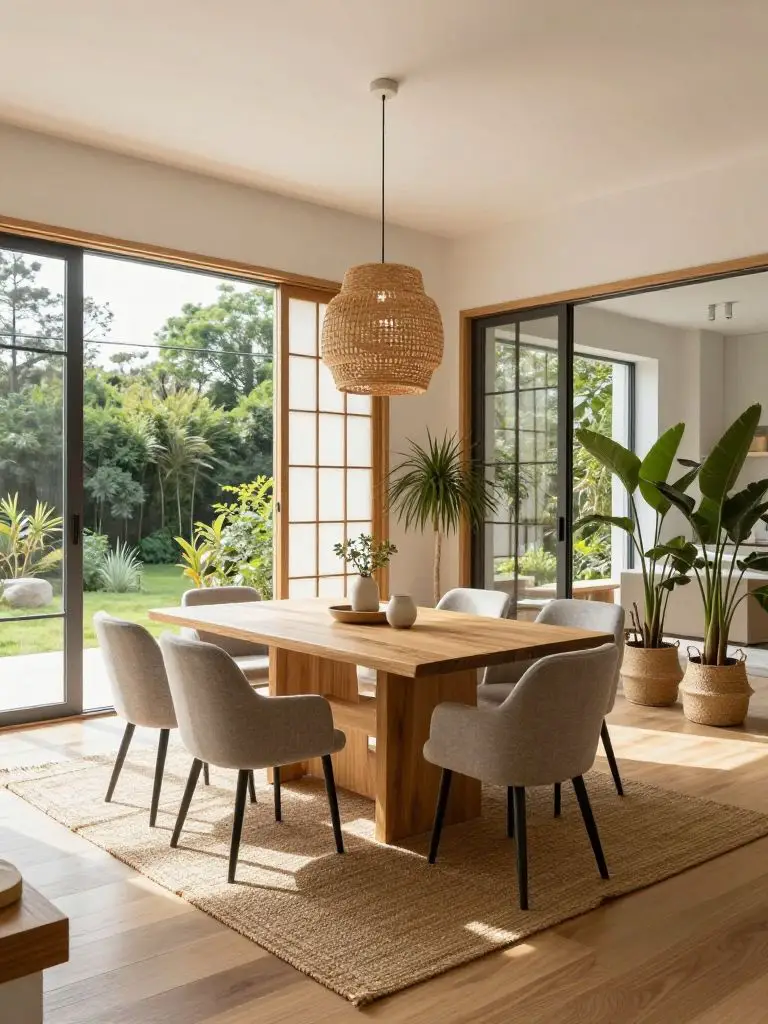
If you’re lucky enough to have access to outdoor space, blurring those boundaries is peak Japandi. Large sliding doors or French doors that open completely dissolve the barrier between inside and out.
Position your dining table parallel to the outdoor access to emphasize the connection. Choose weather-resistant materials like teak or treated oak that can handle humidity from open doors. Add plants both inside and just outside the threshold to create visual continuity.
Keep the indoor palette nature-inspired with greens, browns, and stone grays. This Japandi dining area becomes a transition space that celebrates natural elements year-round.
7. Symmetrical Shoji Panel Japandi Dining Space
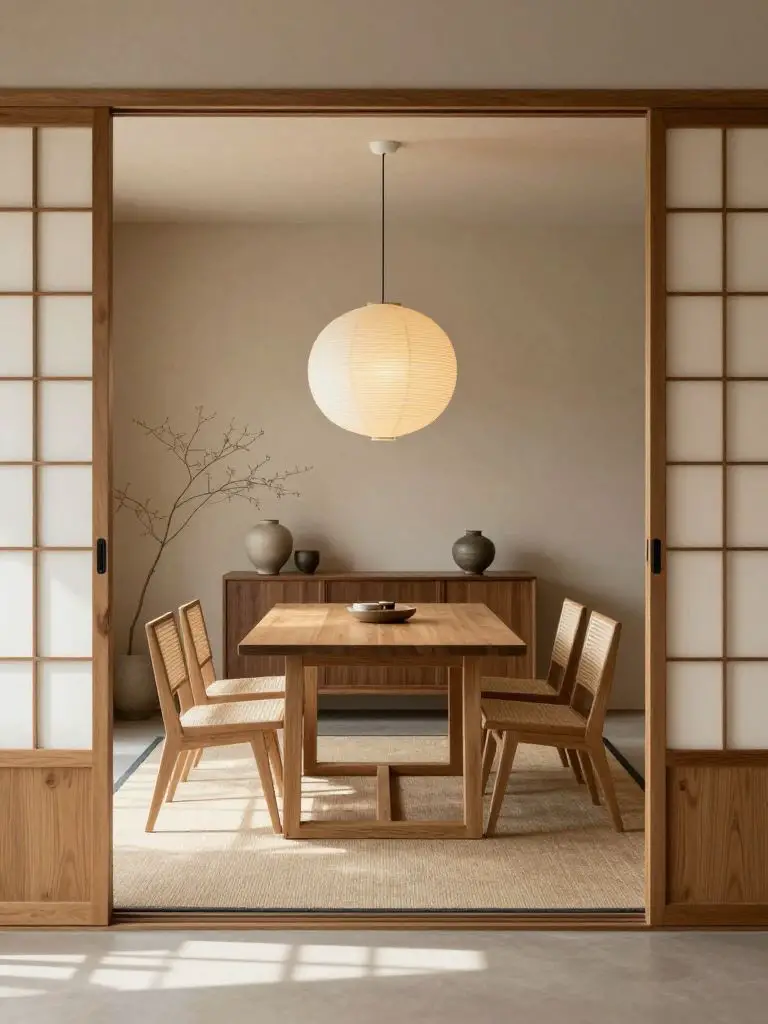
Symmetry brings calm—it’s just facts. Flanking your dining area with matching shoji panels creates a sense of order that’s deeply satisfying. This works especially well if your dining room lacks architectural interest.
Center your table between the panels and choose seating that maintains the balanced aesthetic. Benches on either side with matching end chairs create that mirror effect that feels intentional and composed.
Add symmetrical lighting with two matching pendant lights or wall sconces. The repetition reinforces the minimalist philosophy while adding that Japanese precision to your space.
8. Earthy Clay Accent Wall Japandi Dining Room
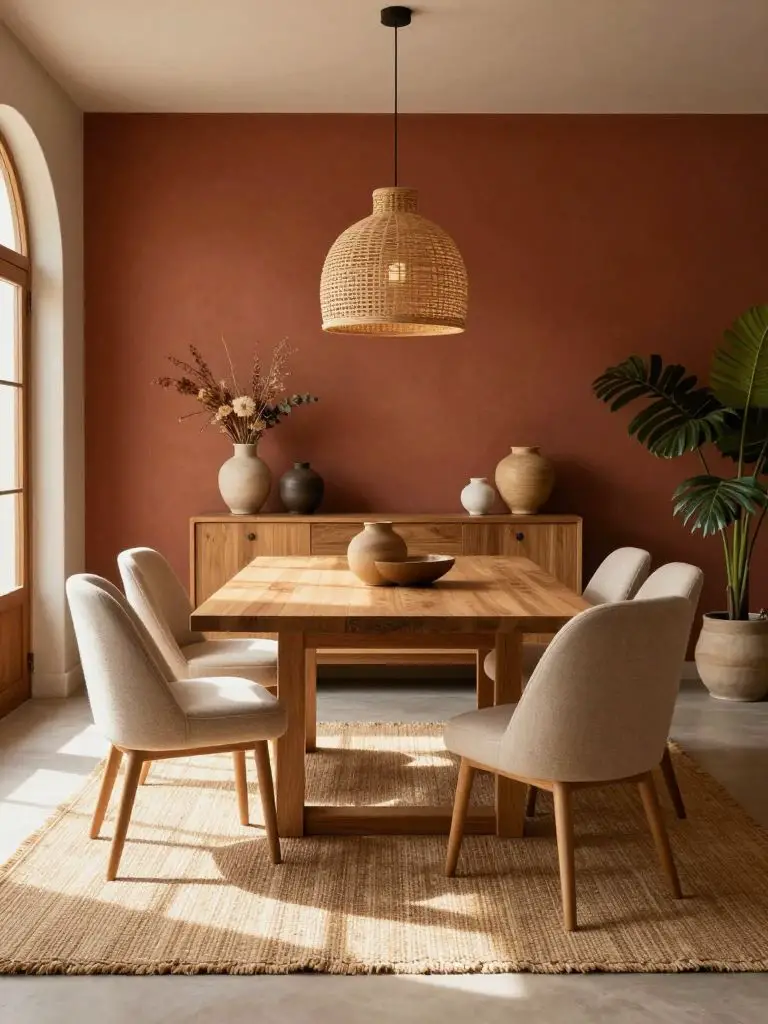
A clay or terracotta accent wall adds earthy warmth that grounds your dining space beautifully. This organic color brings in that wabi-sabi appreciation for natural imperfection while staying neutral enough for minimalist sensibilities.
Position your Japandi dining table against or near this wall to create a focal point. The warm backdrop makes lighter wood tones pop and creates depth without busy patterns or artwork.
Keep other walls in soft white or cream to let the clay color breathe. Add pottery in similar tones—a handmade ceramic vase or bowl brings texture without color competition.
9. Serene Oval Table Japandi Dining Room with Layered Lighting
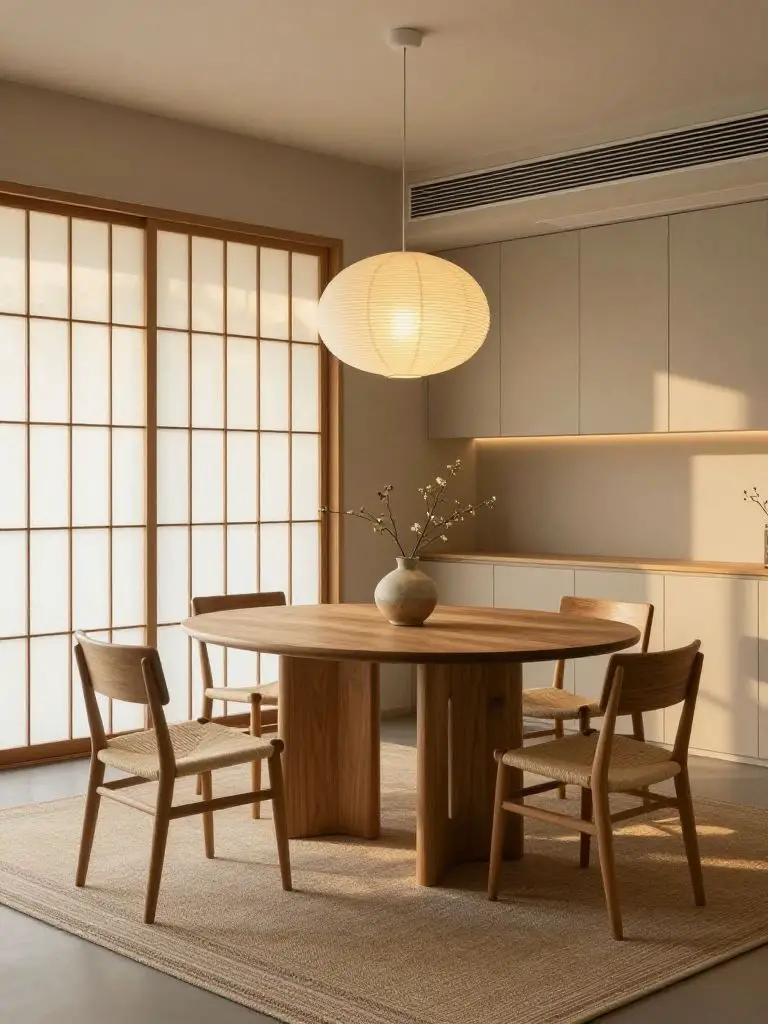
Oval tables are underrated in dining spaces. They soften the geometry of rectangular rooms while seating just as many people as a traditional rectangle. The curved shape feels more welcoming and encourages conversation flow.
Layer your lighting with a statement pendant over the table, wall sconces for ambient glow, and maybe a floor lamp in the corner. This creates flexibility for different moods—bright for family dinners, dim for intimate gatherings.
Choose an oval Japandi dining room table in light ash or oak. Pair it with a mix of chairs and a bench to keep things interesting while maintaining the minimal aesthetic.
10. Natural Wood Japandi Dining Room with Botanical Styling
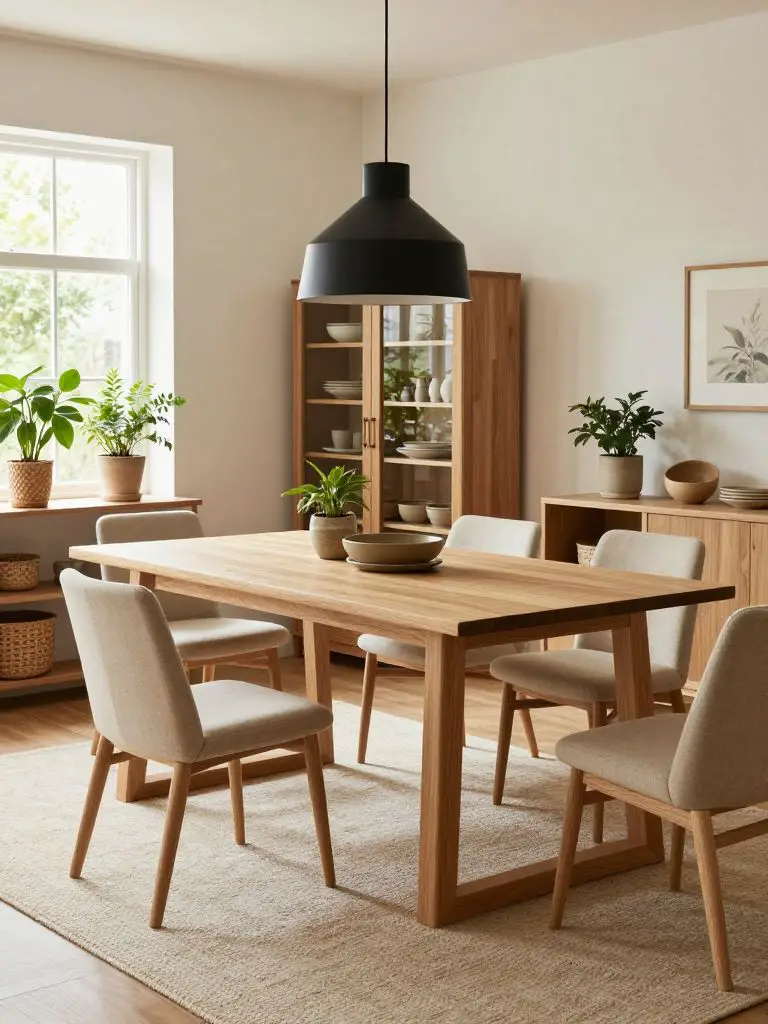
Bringing nature inside is essential to nailing Japandi style. A dining room with generous botanical styling—think potted fiddle leaf figs, hanging plants, or branches in tall vases—creates that connection to the outdoors.
Choose a solid wood dining table that celebrates the grain and natural variations in the material. Imperfections are features, not flaws. Surround it with simple chairs in natural fibers like rattan or linen-upholstered seats.
Keep your plant selection edited. Three to five well-placed plants make more impact than a jungle of small pots. Go for varying heights and leaf shapes for visual interest without clutter.
11. Statement Pedestal Base Japandi Dining Table
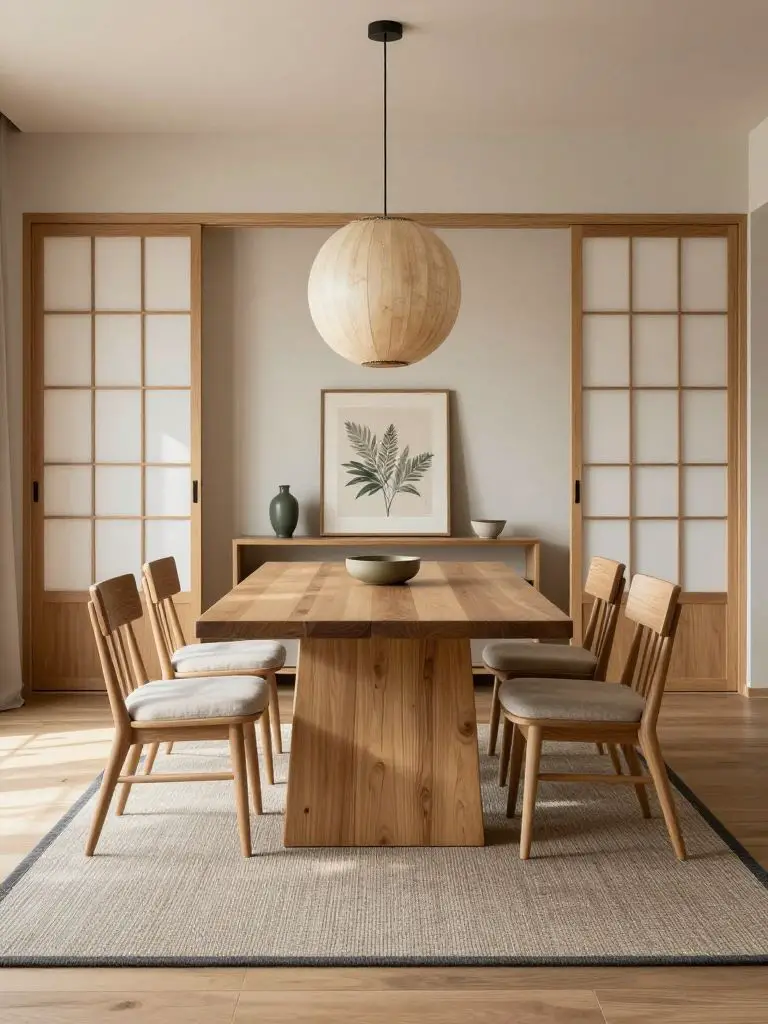
A sculptural pedestal base turns your dining table into functional art. This design choice is very Japandi—it’s minimal in that there are fewer legs to navigate, but the base itself becomes a beautiful focal point.
Look for pedestal designs with organic shapes or interesting wood grain patterns. The base can be slightly more dramatic since you’re keeping everything else pared back. Pair it with the simplest chairs you can find to let the table shine.
This works especially well in smaller minimal dining rooms where a four-legged table might feel bulky. The single base creates visual breathing room underneath.
12. Compact Japandi Dining Room with Foldable Wood Chairs
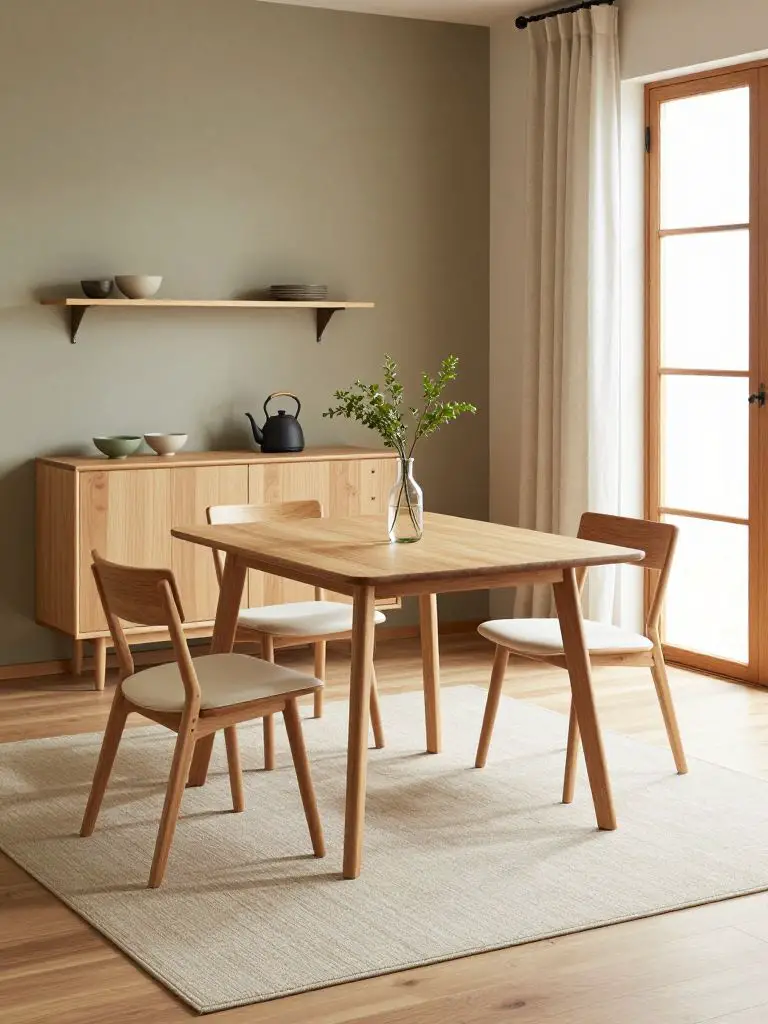
Foldable doesn’t have to mean flimsy or ugly. Beautiful wooden folding chairs bring flexibility to small spaces while maintaining that crafted, intentional Japandi aesthetic.
Choose folding chairs in the same wood tone as your table for cohesion. When not in use, they can hang on wall hooks as sculptural elements or tuck into a slim closet. This setup is perfect for apartment dwellers or anyone who needs their dining space to multitask.
Keep a core set of two chairs out daily, with extras for when guests visit. The flexibility honors the functional Scandinavian side of Japandi while the craftsmanship respects the Japanese influence.
13. Refined Japandi Dining Room with Sculptural Pendant Lighting
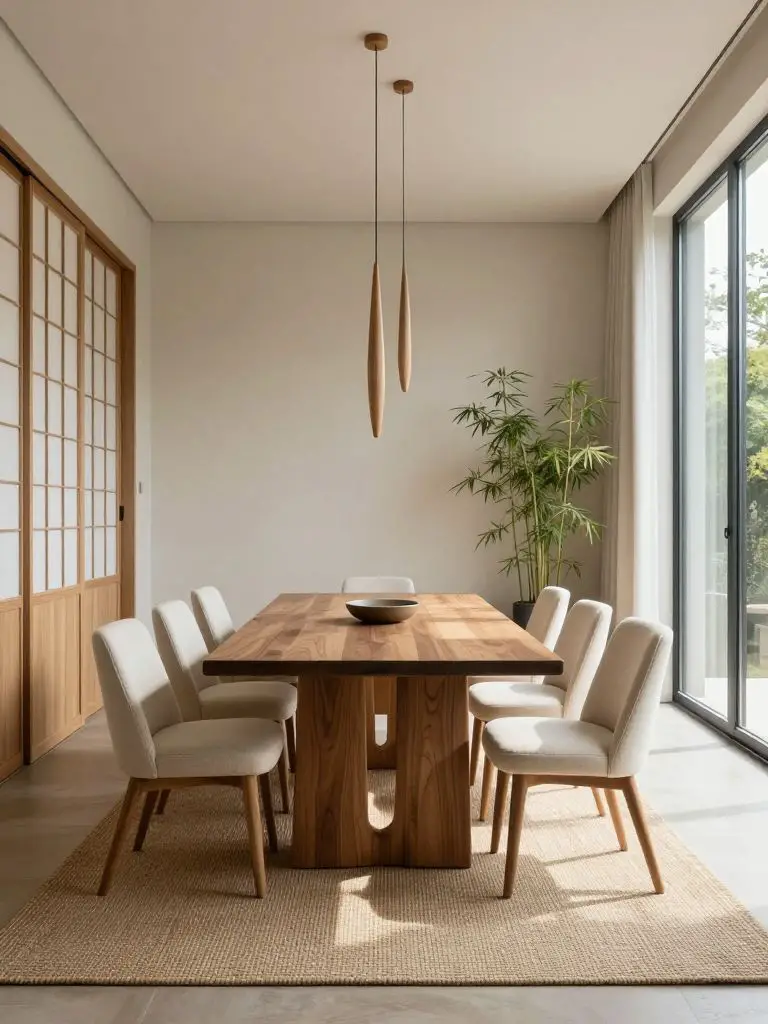
A statement pendant light can anchor your entire dining room design. Choose something with organic shapes—woven rattan, curved wood slats, or a ceramic piece that looks handmade.
Hang your pendant low enough to create intimacy at the table but high enough that it doesn’t obstruct sightlines. The fixture becomes jewelry for your Japandi Scandinavian interior, adding personality without overwhelming the space.
Keep everything else simple—solid color walls, unfussy furniture, minimal tabletop decor. Let your lighting be the conversation piece.
14. Soft Classic Japandi Dining Room with Arched Panel Detail
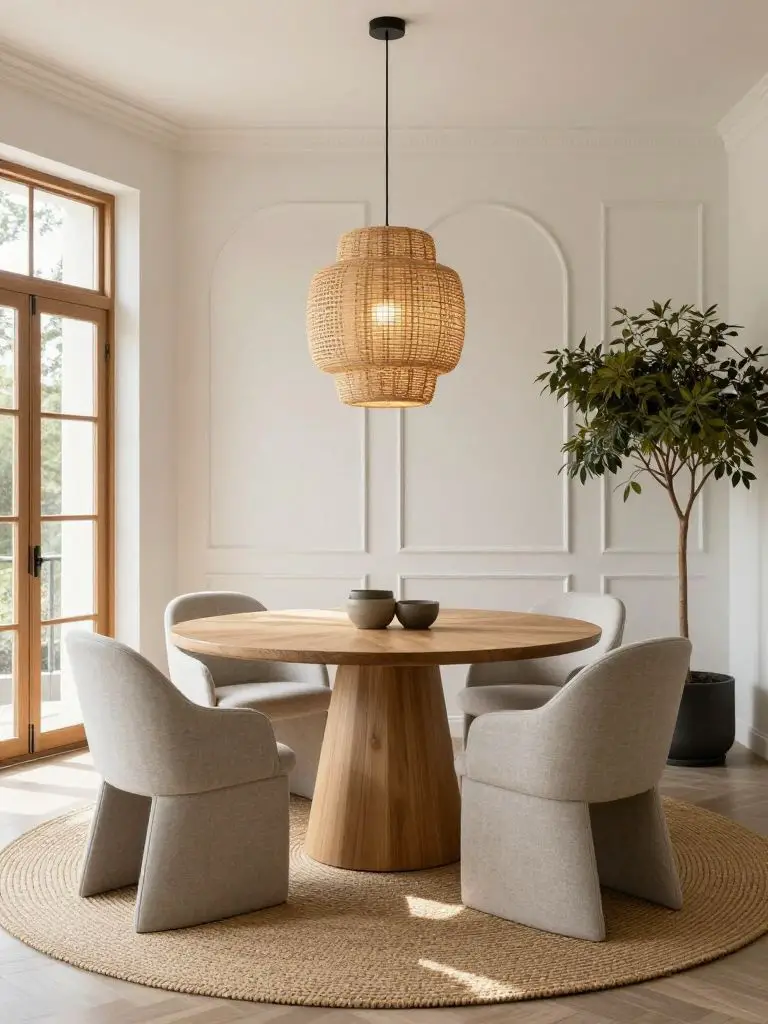
Arched details add softness that balances the straight lines common in minimalist spaces. Whether it’s an arched doorway, wall paneling, or built-in shelving, curves introduce a gentle rhythm.
Paint your arched elements in the same soft neutral as your walls for a subtle, tonal effect. This creates architectural interest without color contrast that might feel too busy.
Position your dining table to face or align with the arched feature. Simple chairs and a natural wood table let the architecture speak while maintaining that calm, uncluttered Japandi vibe.
15. Modern Japandi Dining Area with Layered Ambient Lighting
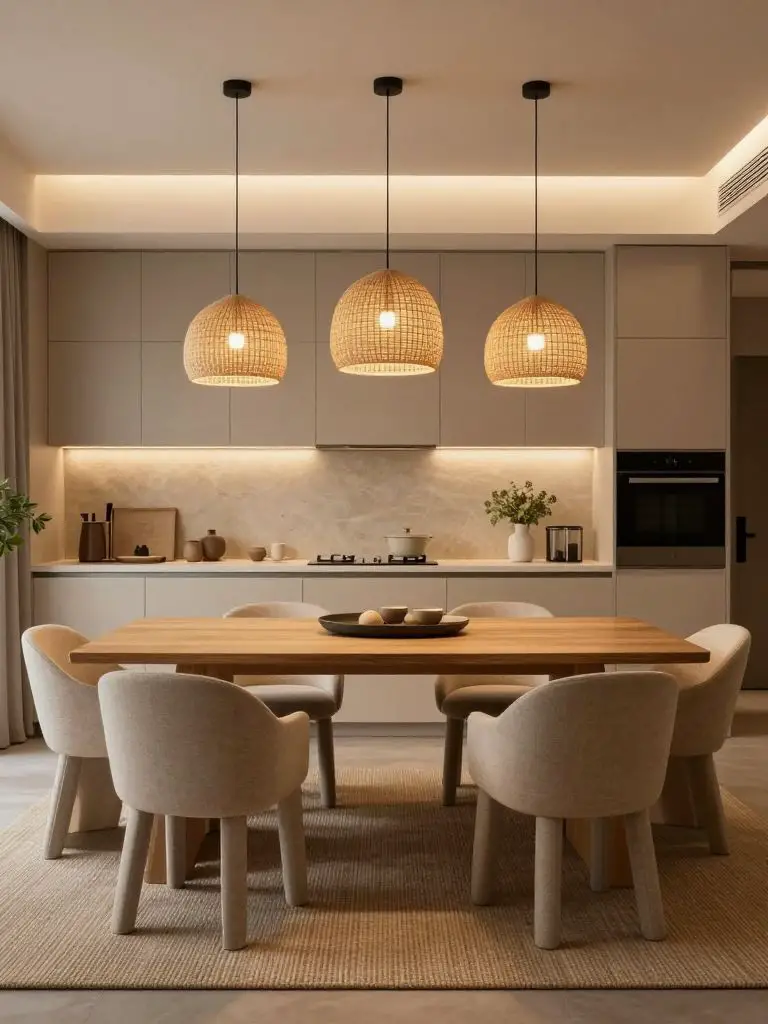
The final touch that elevates any Japandi space is thoughtful lighting. Layered ambient lighting means combining multiple sources at different heights—pendants, sconces, candles, even uplighting behind plants.
Install dimmer switches so you can adjust the mood. Bright light for family meals, soft glow for dinner parties. This flexibility is very Scandinavian in its practicality.
Choose warm-toned bulbs (2700K-3000K) to enhance the natural wood and neutral palette. Good lighting makes your Japandi dining room feel intentionally designed rather than just decorated.
Creating a Japandi dining room is all about finding that sweet spot between minimalism and warmth. You don’t need a lot of stuff—just the right stuff. Focus on quality materials, natural textures, and pieces that serve both function and beauty. Whether you’re drawn to shoji screens, sculptural lighting, or earthy color palettes, these 15 ideas prove that calm and stylish aren’t mutually exclusive. Now go create a dining space that makes you actually want to linger at the table.