
Imagine living where the city lights fade and true peace begins. Many American families dream of energy independence. A reliable off grid power setup means you never worry about power outages.
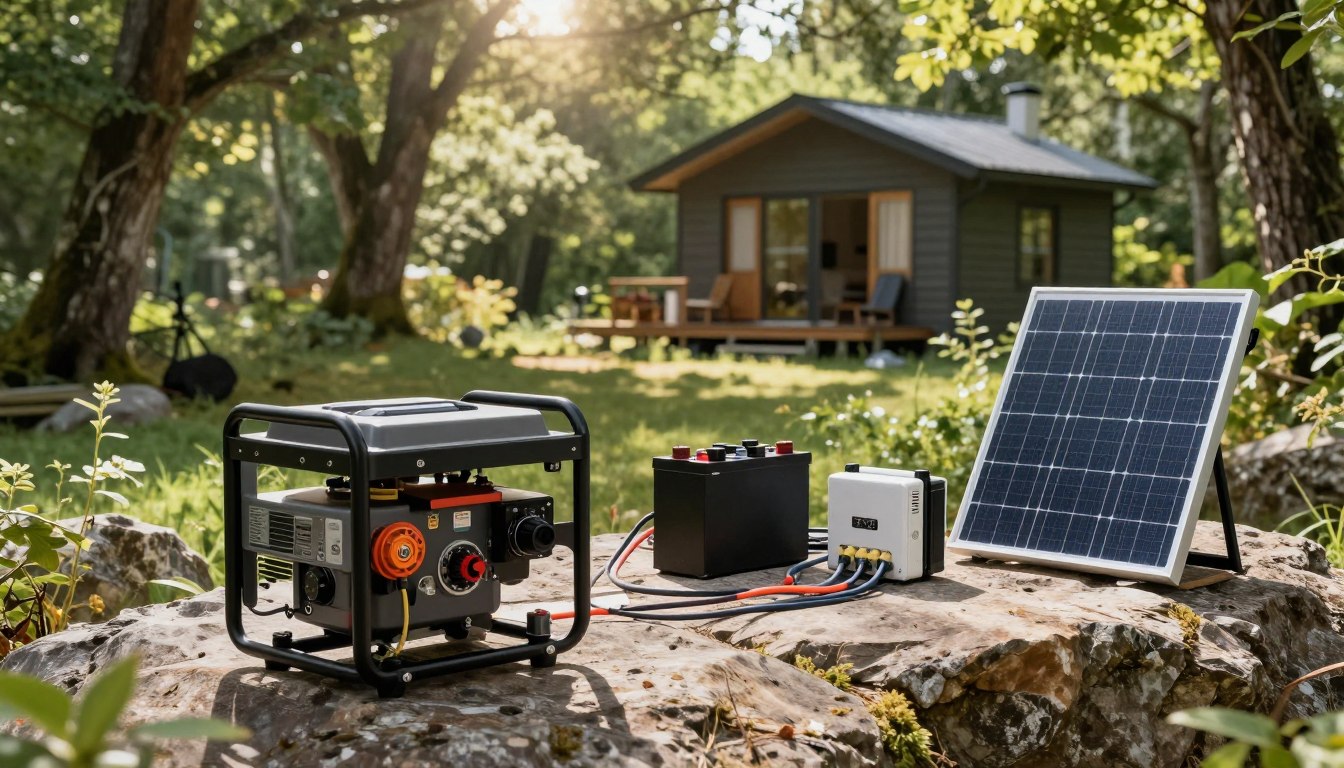
This guide makes setting up a dependable energy source easy. We offer a friendly approach to help you master your off grid generator setup. You’ll quickly learn to manage your own electricity with total confidence.
Understanding Your Off Grid Power System Needs
Knowing how much energy you need is key to setting up an off-grid power system. It’s not just about picking a generator. It’s about creating a full power solution that fits your needs.
Benefits of Off Grid Energy Independence
Off-grid generators can work on their own, giving power in places far from the grid. They’re not just for backup like standard generators. Off-grid generators are meant to be your main power source. They work with batteries and solar panels to give you reliable, green energy.
Benefits of Off Grid Energy Independence
Going off-grid has many perks. It lets people and communities make their own power, cutting down on public utility use. This boosts energy security and helps the planet by using green energy.
The good things about off-grid energy freedom are:
- Power that’s always there and steady
- Less need for grid electricity
- Chance to use green energy
- Lower energy costs over time
Common Applications for Off Grid Power Generation
Off-grid power is useful in many places. It’s used in:
- Remote homes and cabins
- Farms and agricultural areas
- Telecom setups
- In emergencies and disaster relief
These examples show how off-grid power is flexible and vital. It brings energy where it’s most needed.
Calculating Your Power Requirements
Understanding your energy needs is the first step towards designing an effective off-grid power system. This involves a thorough assessment of your energy consumption patterns. It ensures your off-grid generator can meet your demands.
Creating a Comprehensive Appliance List
Start by making a list of all the appliances and devices you plan to power with your off-grid energy solution. This includes lights, refrigerators, computers, and any other electrical devices. It’s crucial to be thorough to avoid underestimating your energy needs.
Consider the types of appliances you have, their power consumption, and how often they are used. This information will be vital in determining your overall energy requirements.
Determining Peak and Continuous Wattage Needs
Appliances have different wattage requirements, typically categorized into peak (or surge) wattage and continuous wattage. Peak wattage is the higher power needed to start an appliance, while continuous wattage is the power required to keep it running.
| Appliance | Peak Wattage | Continuous Wattage |
|---|---|---|
| Refrigerator | 1200 | 200 |
| LED Lights (10) | 100 | 100 |
| Laptop | 200 | 50 |
Planning for Future Power Expansion
When calculating your power requirements, it’s also important to consider future needs. Anticipating potential increases in energy demand can save you from having to upgrade your system prematurely.
Consider factors like additional appliances you might acquire or an expansion of your living or working space. Planning ahead ensures your off-grid power generation system remains effective and efficient over time.
Choosing the Right Generator Type for Your Off Grid Energy Solutions
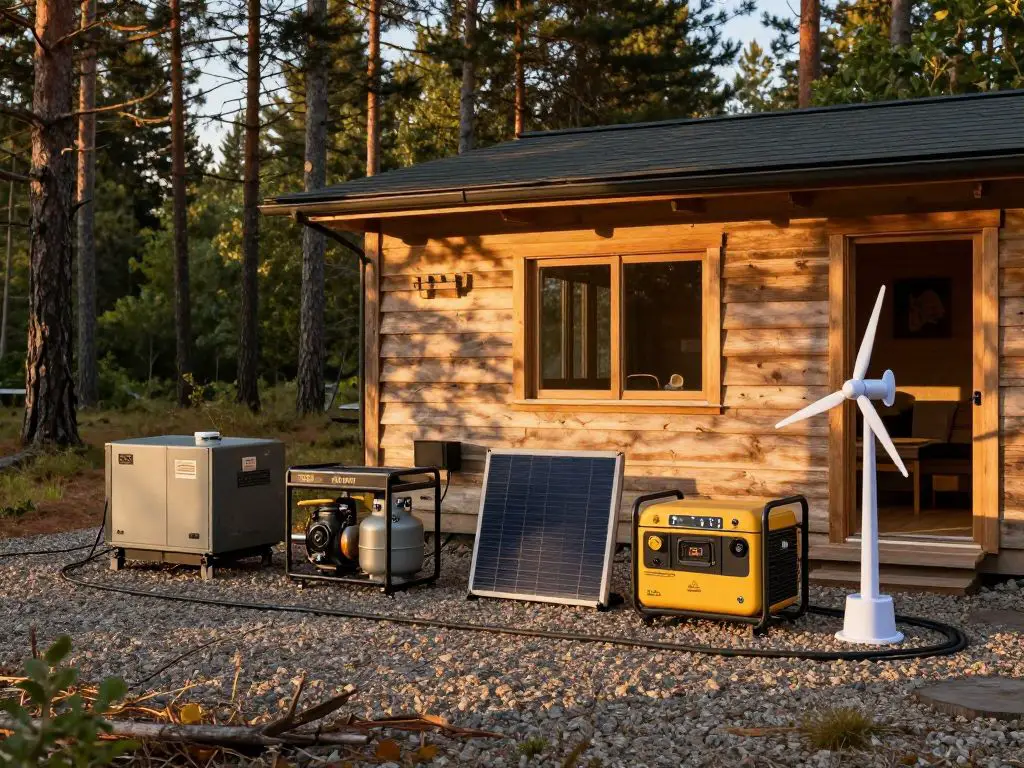
Choosing the right generator is key for your off grid energy setup. The type of generator affects efficiency, reliability, and cost. It’s a crucial decision.
When looking at off grid energy solutions, it’s important to know the different generators. Each has its own benefits and is best for certain uses.
Diesel Generators for Heavy-Duty Applications
Diesel generators are known for their strength and efficiency in tough situations. They’re great for remote areas where lots of power is needed. Diesel generators provide a reliable power source.
Diesel generators can run for a long time. They’re also easy to keep running because diesel engines are well-understood and serviced.
Propane and Natural Gas Generators
Propane and natural gas generators are good alternatives for off grid energy. They’re cleaner than diesel, making them better for the environment. They’re good for places where clean energy matters.
Propane generators are great where propane is easy to get. They’re quieter and can save money over time.
Off Grid Solar Generator Systems
Off grid solar generator systems are a big step towards green energy. They use sunlight to make electricity, which is good for the planet.
Solar generators work best where it’s sunny. They need little upkeep and can cut down on energy bills.
Hybrid Off Grid Renewable Energy Options
For those wanting to mix energy sources, hybrid off grid renewable energy options are a good choice. Hybrid systems use solar, wind, and diesel to give a steady and efficient power supply.
Hybrid systems are flexible and can change with energy needs. They help make the most of energy and use less of one source.
Essential Components for Your Off Grid Power Setup
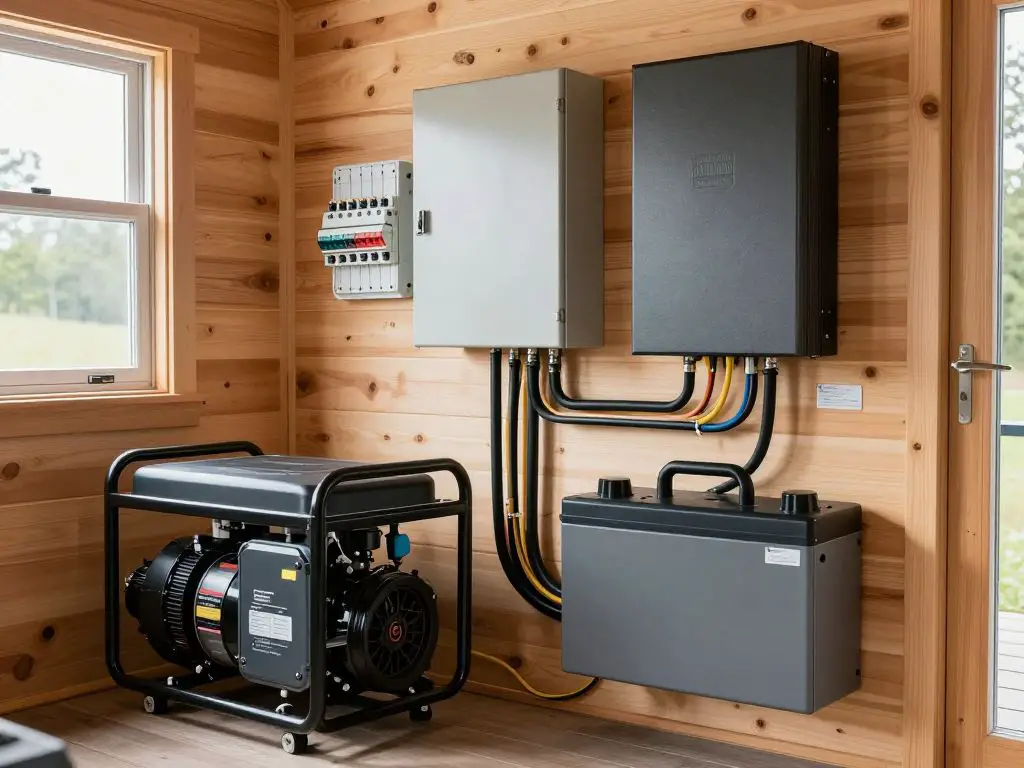
A good off-grid power setup needs several key parts. These parts work together to give you reliable and efficient energy.
It’s important to know these components well. They include the generator unit, transfer switch and control panels, battery bank, inverter and charge controller, and wiring, breakers, and protection equipment.
Generator Unit Specifications
The generator unit is the core of your off-grid power setup. It makes electricity. When picking a generator, look at power output, fuel efficiency, and durability. Diesel generators are great for heavy use because they’re reliable and efficient.
A diesel generator with the right power can power a remote home or small business well. Make sure the generator’s power matches your needs to avoid problems.
Transfer Switch and Control Panels
A transfer switch is key. It lets you switch between power sources like the grid and your generator. Control panels let you monitor and manage your power system from one place.
Today’s control panels have cool features like remote monitoring and automated start/stop. These features make your off-grid power setup more efficient and convenient.
Battery Bank Requirements for Off Grid Battery Setup
The battery bank is vital for an off-grid battery setup. It stores extra energy for later use. The size and type of batteries needed depend on your energy storage needs and system design.
Deep cycle batteries are best for off-grid systems because they can be used a lot and recharge often. It’s important to size your battery bank right to meet your energy needs when you’re not generating power.
Inverter and Charge Controller Selection
An inverter changes DC power from your battery bank to AC power for your appliances. Choose an inverter based on your appliance’s power needs and the type of power waveform you need.
A charge controller controls energy flow from your generator or renewable source to your battery bank. It stops overcharging and helps your batteries last longer.
Wiring, Breakers, and Protection Equipment
Good wiring, circuit breakers, and protection equipment are crucial for safe and efficient off-grid power system operation. Use the right wiring size, install circuit breakers to prevent overloads, and add surge protectors.
Make sure all electrical connections are secure and follow local electrical codes. This prevents electrical hazards and keeps your system reliable.
Complete Off Grid Generator Setup: Step-by-Step Installation Process
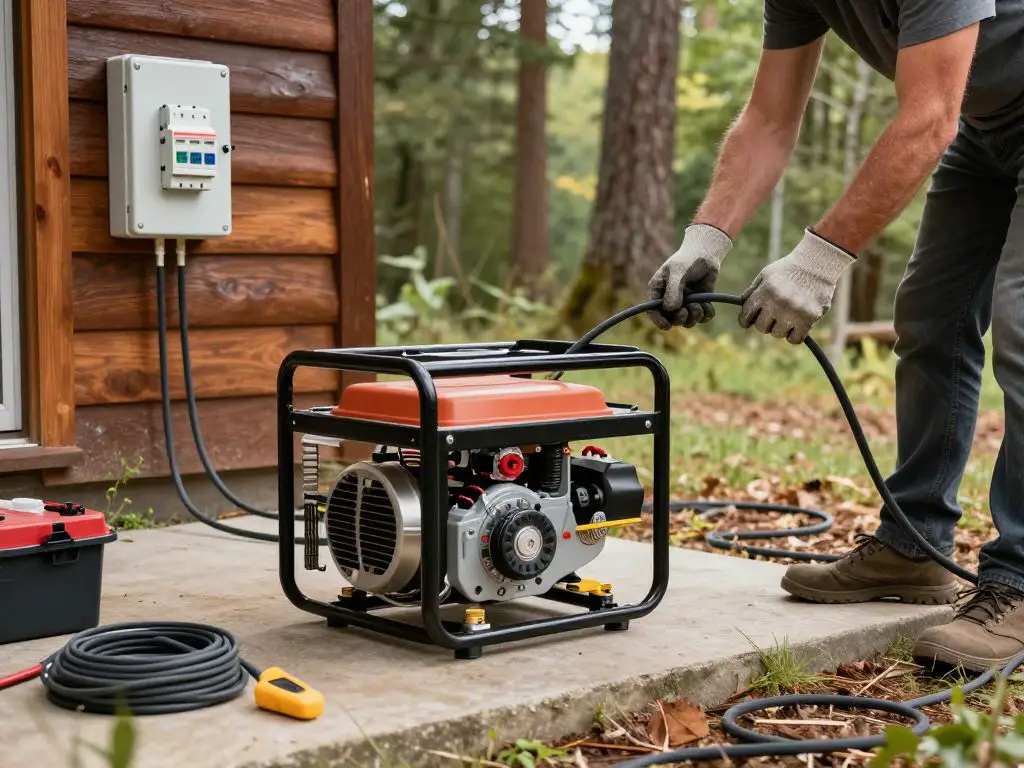
Setting up an off-grid generator is easy when you break it down. This guide will help you through each step for a successful setup.
Step 1: Selecting and Preparing the Generator Location
Choosing the right spot for your generator is key. It needs to be well-ventilated, dry, and safe from the weather. Think about the noise and how close it is to your house and neighbors.
- Make sure the spot is level and solid to avoid shaking.
- Keep it away from windows, doors, and air intakes.
- Make sure there’s enough space around the generator for upkeep.
Step 2: Installing the Generator Base and Mounting
A strong base is vital for the generator’s performance. Use a concrete pad or a heavy-duty platform to reduce vibrations and keep it stable.
Key considerations:
- The base must be level and securely attached to the ground.
- Use the right anchoring systems to stop it from moving.
Step 3: Connecting Fuel Lines and Systems
Installing fuel lines correctly is crucial for safe and efficient use. Use approved materials and follow the manufacturer’s instructions.
Important safety tips:
- Make sure all connections are tight and leak-free.
- Check fuel lines regularly for damage or wear.
Step 4: Installing the Transfer Switch
The transfer switch is key for switching between your generator and the main power grid. Install it as the manufacturer says and follow local electrical codes.
Key steps:
- Find a good spot for the transfer switch, usually near the electrical panel.
- Connect it to the generator and the main electrical panel.
- Test the transfer switch to make sure it works well.
Step 5: Running Electrical Connections to Your Home
Running electrical connections needs careful planning and doing. Make sure all wiring follows local codes and the manufacturer’s instructions.
- Use the right gauge wiring for the generator’s output.
- Make sure all connections are secure and safe.
Step 6: Grounding Your Generator System Properly
Grounding is vital for safety and performance. Follow the manufacturer’s guidelines and local codes to ground your system correctly.
Grounding tips:
- Use a grounding rod that meets local codes.
- Make sure all metal parts are bonded to the grounding system.
By following these steps, you can set up your off-grid generator successfully. Always follow safety rules and local laws.
Integrating Battery Storage with Your Generator
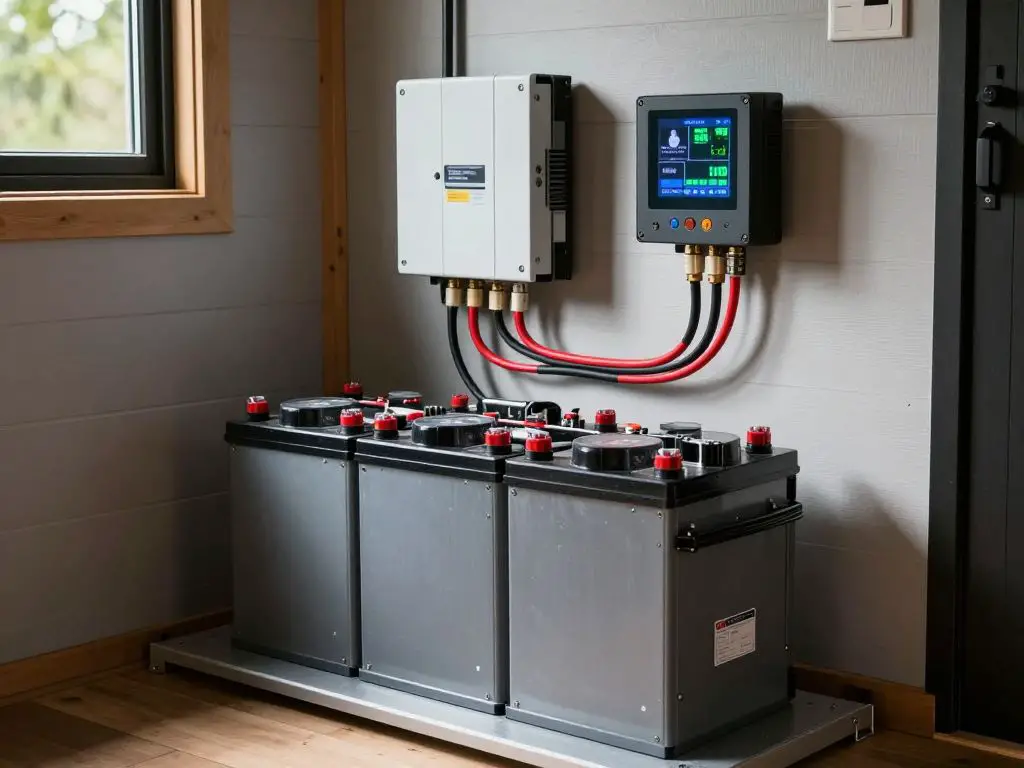
To get the most out of your off-grid energy, adding a battery storage system is key. It makes your generator work better and gives you power when the grid goes down.
Sizing Your Battery Bank Correctly
Choosing the right size for your battery bank is important. Think about how much power you use each day and how long you want backup power to last. A bigger bank means longer backup times but takes up more space and costs more upfront.
- Calculate your total daily energy consumption in watt-hours (Wh).
- Determine the desired autonomy (backup time) in hours.
- Choose a battery type that suits your needs, such as deep cycle or lithium-ion batteries.
Wiring Batteries in Series and Parallel Configurations
You can wire batteries in series to boost voltage or in parallel to increase capacity. Mixing both can get you the right voltage and capacity.
Wiring batteries in series:
- Increases the total voltage of the battery bank.
- Keeps the same capacity (Ah).
Wiring batteries in parallel:
- Increases the total capacity (Ah) of the battery bank.
- Keeps the same voltage.
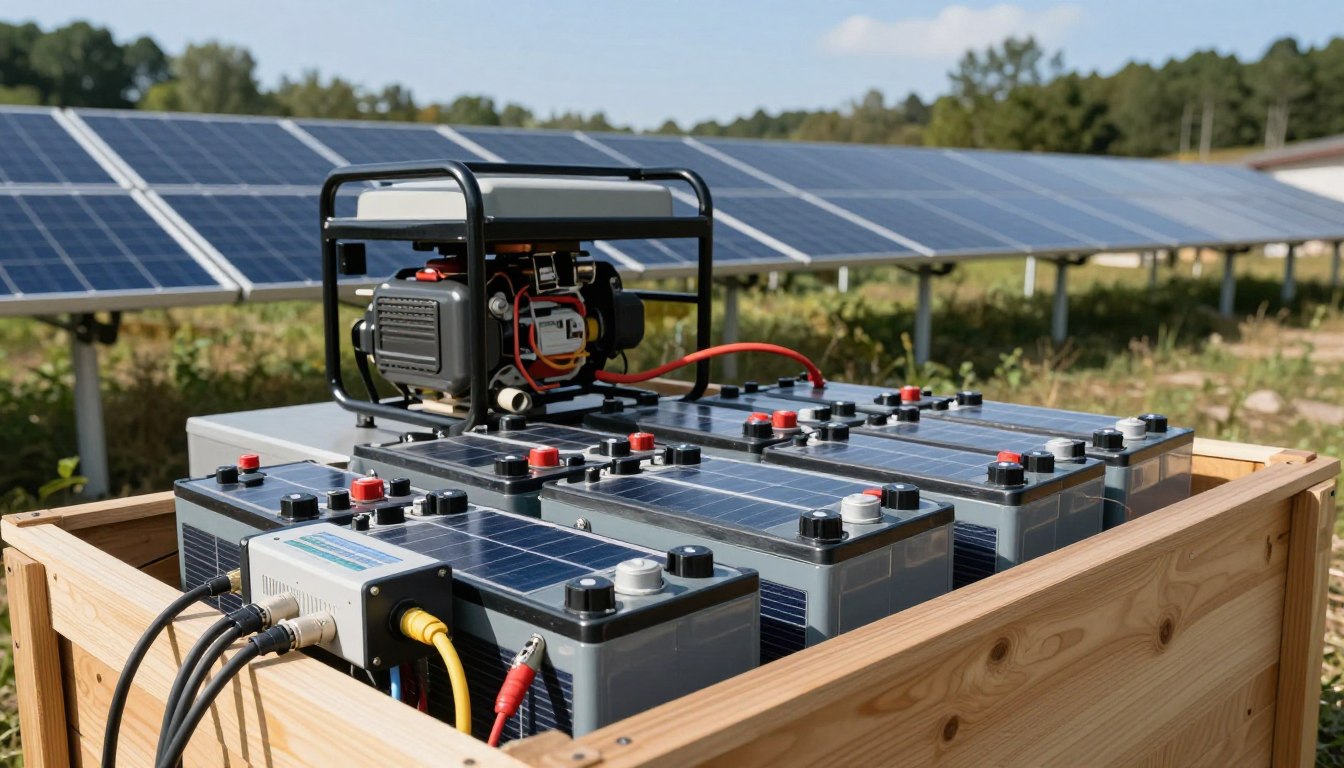
Connecting the Charge Controller
The charge controller manages energy flow from the generator to the batteries. It stops overcharging and charges efficiently.
When picking a charge controller, look at:
- Compatibility with your battery type.
- Maximum current and voltage ratings.
- Monitoring and control features.
Synchronizing Generator Run Times with Battery Charging
Matching generator run times with battery charging saves fuel and reduces wear. This makes your system more efficient.
To sync up:
- Use a charge controller with a generator control interface.
- Set the charge controller to control the generator based on battery charge.
- Keep an eye on the system to make sure it’s working right.
By following these steps, you can improve your off-grid setup. This makes your off grid energy solutions more efficient and reliable.
Safety Measures and Code Compliance
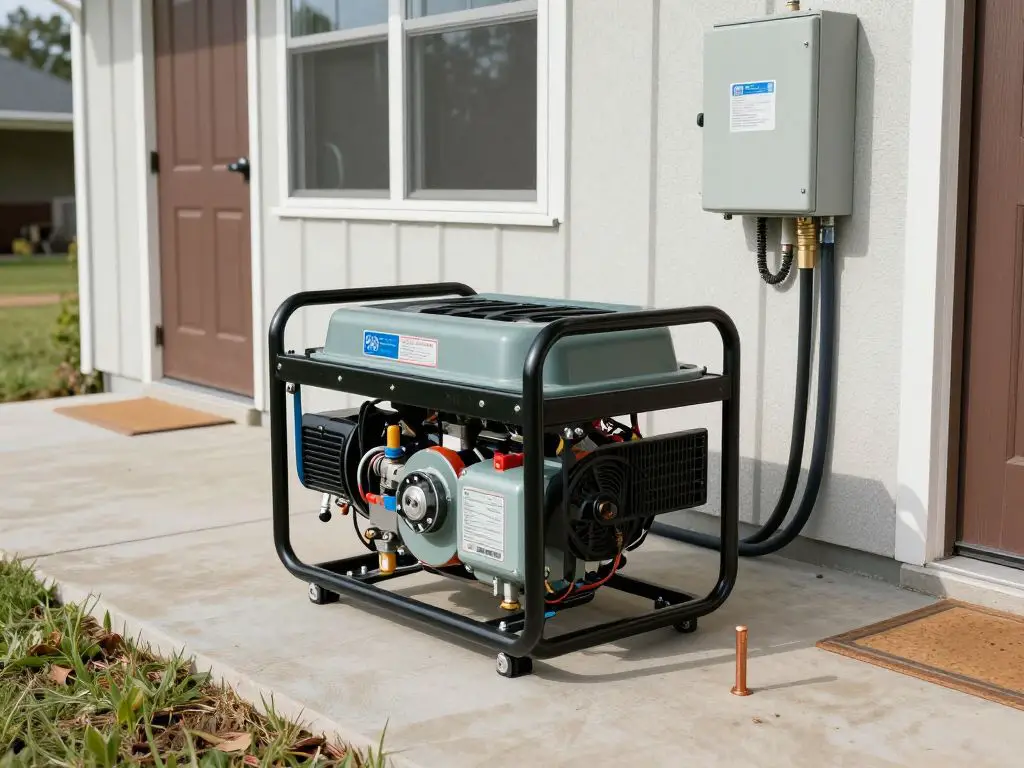
Keeping everyone safe and following local rules is key when setting up an off-grid generator system. This helps protect users, the environment, and makes the system last longer and work better.
Local Permitting and Inspection Requirements
Before you install an off-grid generator, you must know and follow local rules. These rules change in different places, so talking to local authorities is a must.
Key steps include:
- Getting the right permits before you start
- Booking inspections as local rules say
- Following local building codes and zoning laws
Carbon Monoxide Prevention and Ventilation
Generators can make carbon monoxide (CO), a dangerous gas. Good ventilation is key to stop CO from building up.
Prevention measures include:
- Putting CO detectors near where people sleep and the generator
- Making sure there’s good air flow around the generator
- Never using a generator inside or in a closed area
Fire Safety and Clearance Distances
Generators can be a fire risk if not set up right. Keeping enough space and following fire safety rules is very important.
| Clearance | Minimum Distance |
|---|---|
| From flammable materials | 3 feet |
| From openings (doors, windows) | 5 feet |
| From fuel storage | 10 feet |
Proper Fuel Storage and Handling
How you store and handle fuel is very important for generator safety. Bad storage can cause accidents and harm the environment.
Best practices include:
- Storing fuel in approved containers
- Keeping fuel storage areas well-ventilated and away from living spaces
- Regularly checking fuel lines and connections for leaks
Testing Your System and Ongoing Maintenance
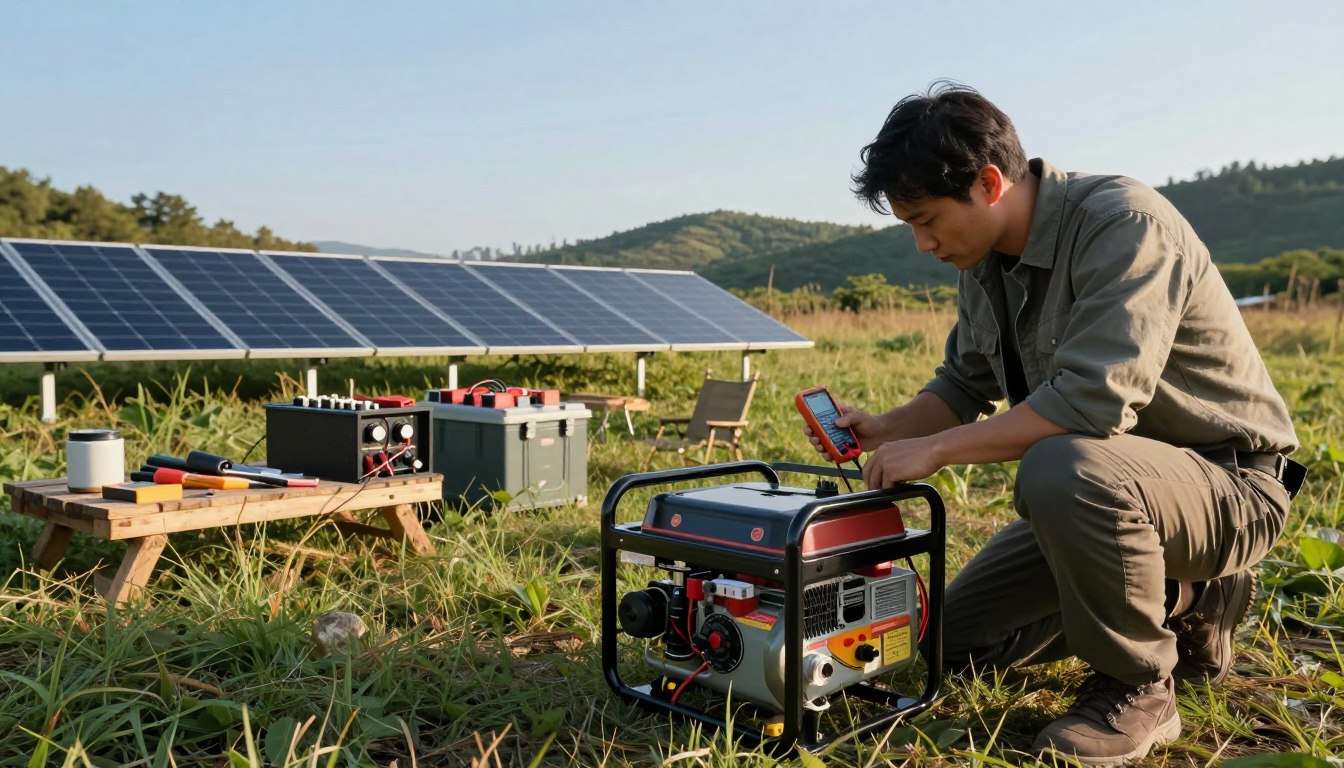
Ensuring your off grid generator setup works well is key. After setting it up, you need to check it often. This makes sure it runs smoothly and lasts longer.
A well-kept generator gives you steady power. It also helps it last longer and avoids sudden breakdowns. We’ll show you how to test your system, keep it in good shape, fix common problems, and watch its performance.
Initial System Testing and Load Verification
First, test your off grid generator setup thoroughly. Make sure all parts work right under different loads.
Start by testing it when it’s not under load. Then, add loads to see if it can handle the power you need. This helps find problems early.
Make sure important appliances work right. Also, check the voltage and frequency to see if they’re good for your gear.
Creating a Regular Maintenance Schedule
Keeping your off grid generator setup in good shape is crucial. A regular maintenance schedule helps you stay on track.
Include tasks like oil changes, filter swaps, and checking important parts in your schedule. Follow what the maker says for when to do these things.
- Daily: Check oil and coolant levels.
- Weekly: Look at air filters and clean or change them if needed.
- Monthly: Check on your batteries and connections.
- Quarterly: Do a deep check of the generator and its parts.
Troubleshooting Common Generator Issues
Even with regular care, problems can still happen with your off grid generator setup. Knowing how to fix common issues can save you time and keep your generator running.
| Issue | Possible Cause | Solution |
|---|---|---|
| Generator not starting | Fuel issues, faulty ignition, or dead battery | Check fuel levels, inspect ignition system, and charge or replace the battery |
| Low voltage output | Incorrect settings or faulty voltage regulator | Adjust settings according to manufacturer’s guidelines or replace the voltage regulator |
| Overheating | Insufficient cooling or blockage in the cooling system | Check coolant levels, inspect for blockages, and ensure proper airflow |
Monitoring Performance and Efficiency
It’s important to keep an eye on how well your off grid power setup is doing. This helps you find ways to improve and keep it running at its best.
Track how much fuel you use, how long it runs, and any upkeep. This info helps you spot trends and make smart choices about your generator.
Looking at how you use energy can also help. Think about changing your habits or adding more green energy sources to your setup.
Conclusion
Now you know how to set up an off grid generator. This guide helps you create a system that meets your energy needs. It makes you less dependent on the grid and gives you a green power source.
Choosing solar or hybrid systems is a smart move. They are better for the planet than old generators. With the right parts and setup, you can be energy independent.
Remember to keep your system safe and well-maintained. Regular checks help it work better and last longer. This way, you get the most out of your off grid setup.
Ready to be energy independent? Use what you learned here to start your project. Begin building your green energy system today. Enjoy a steady and clean power supply.