
Going off-grid doesn’t mean you have to compromise on beautiful kitchen design. I’ve seen too many people assume that living sustainably means giving up aesthetics, but that’s just not true anymore. Whether you’re building a homestead kitchen design from scratch or converting an existing space, these off-grid setups prove you can have both function and serious style.
The best part? Most of these designs work for any budget and skill level. You don’t need to be a master carpenter or electrician to create a kitchen that’s independent from the grid. Let’s look at ten real-world kitchen designs that blend sustainability with genuine appeal.
1. Small Cabin Kitchen with Roof-Mounted Solar and Battery Storage
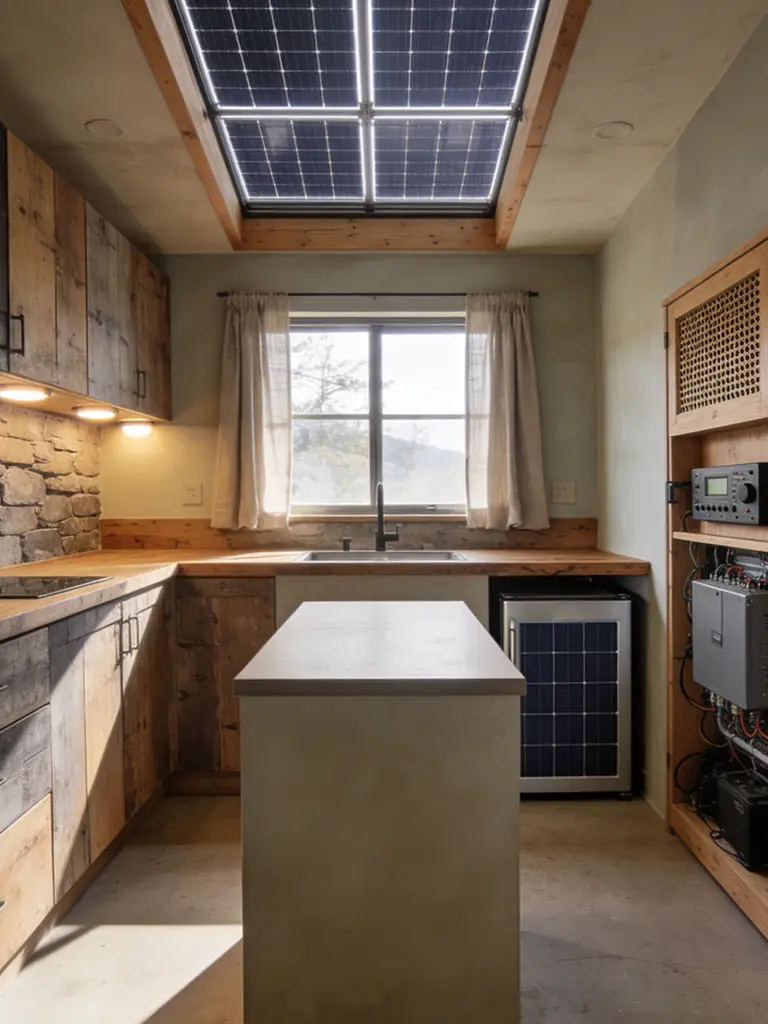
This setup is perfect if you’re working with limited square footage but want full cooking capabilities. The roof-mounted solar panels collect energy during the day, storing it in a battery bank tucked beneath the counter or in a nearby closet. I love how clean this looks since all the tech stays hidden.
Small cabin kitchens benefit massively from vertical storage and multi-purpose surfaces. Think open shelving made from reclaimed wood, magnetic knife strips, and hooks for hanging pots. Your inverter and charge controller can fit in a slim cabinet, keeping everything accessible but out of sight.
The key here is sizing your battery bank correctly for your actual needs. Most people overestimate, but a modest 200-400Ah battery setup handles LED lighting, a small fridge, and occasional blender use without issue.
2. Wood-Burning Stove Kitchen with Solar-Powered Lighting
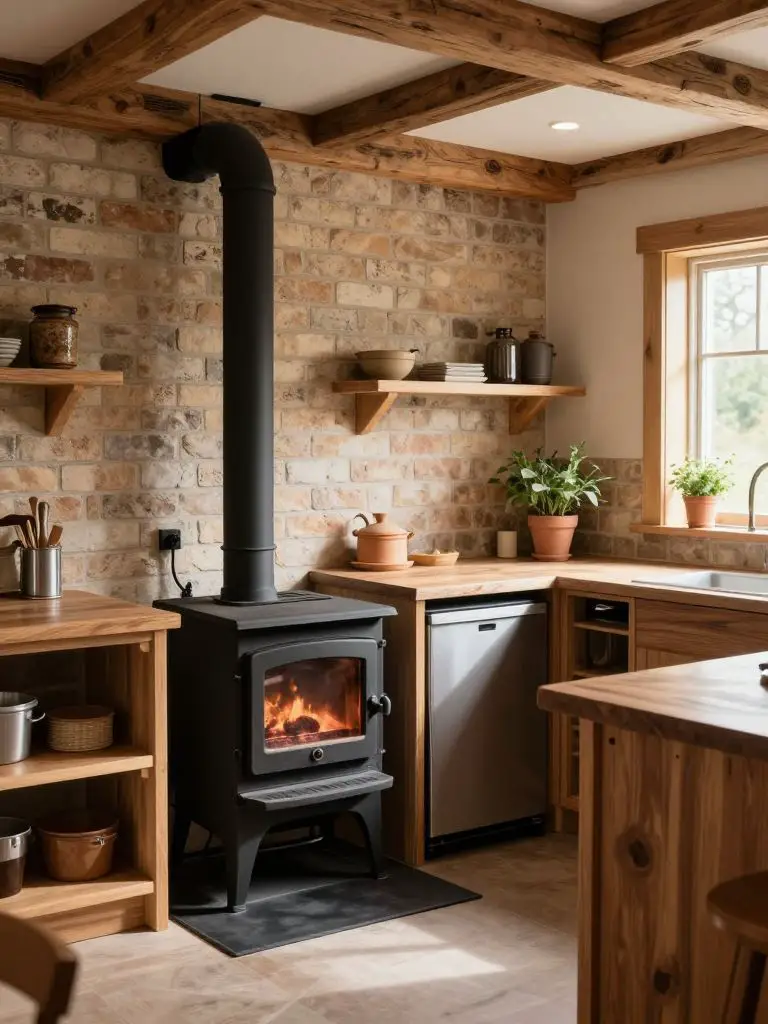
There’s something incredibly satisfying about cooking on a wood-burning stove. This design combines old-school heating and cooking with modern solar-powered LED lights overhead. You get the romance of a crackling fire plus the convenience of reliable evening lighting.
Wood stoves pull double duty by heating your space while you cook, which makes them ideal for colder climates. The solar component doesn’t need to be massive since you’re only powering lights and maybe a small device charging station.
I’ve found that people who choose this setup tend to embrace a slower cooking style, which honestly makes food taste better anyway. Plus, there’s no electric bill to worry about, and you’re using renewable fuel if you’re sourcing wood responsibly.
3. Tiny Home Kitchen with Compact Battery Cabinet and Inverter
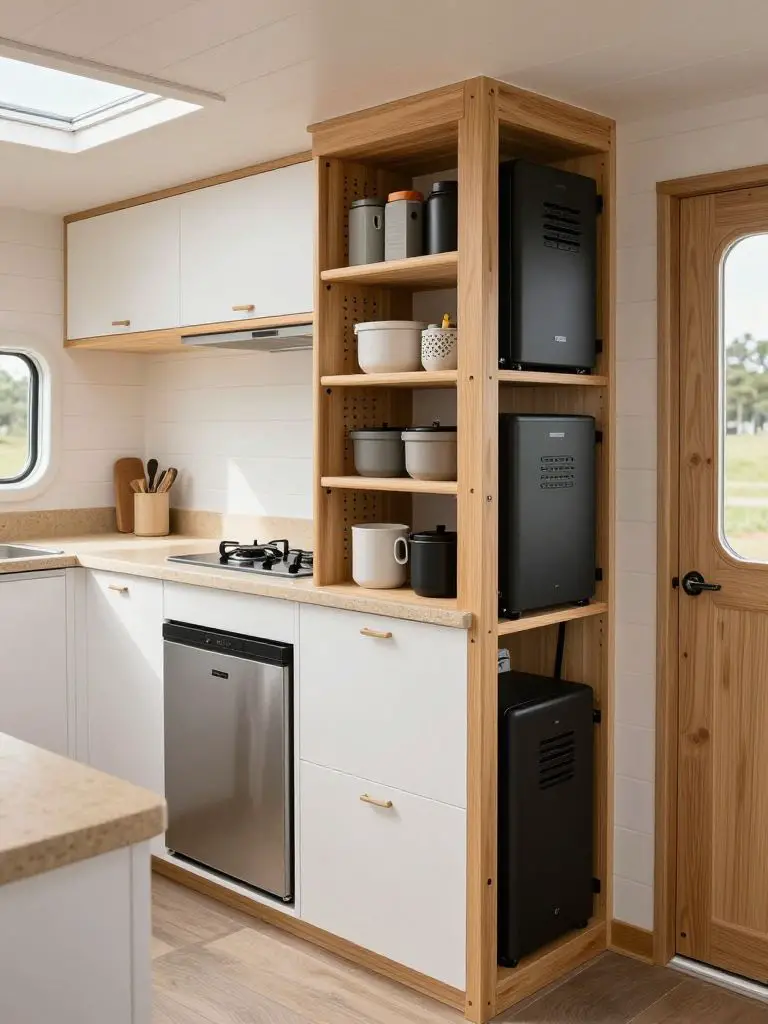
Off grid tiny house kitchens require smart planning, and this design nails it. A dedicated cabinet houses your battery bank, inverter, and all electrical components in one organized spot. Everything stays contained, which is crucial when you’re working with 100 square feet or less.
This approach works beautifully because you can wire your entire kitchen from one central point. Your mini-fridge, induction cooktop, and outlets all connect to the same system. Label everything clearly so troubleshooting stays simple.
Consider using lithium batteries if your budget allows. They’re lighter, last longer, and handle the charge-discharge cycles better than lead-acid options. That matters when your kitchen depends on consistent power.
4. Rustic Stone Kitchen with Propane Cooktop and Solar Fridge
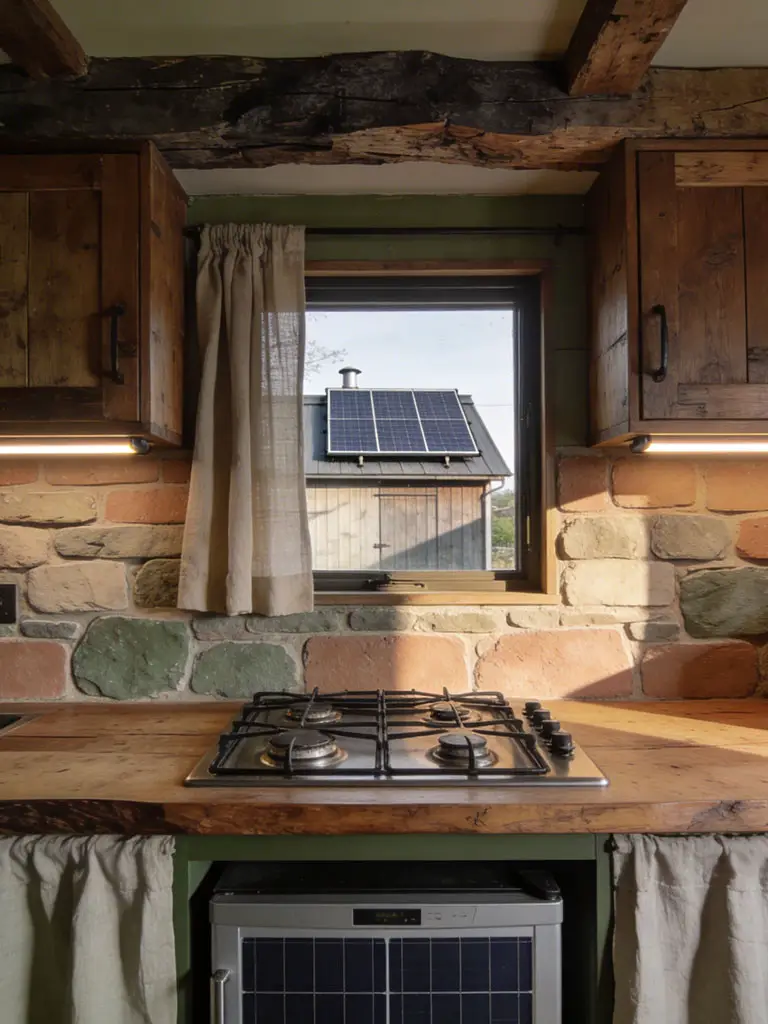
This design brings serious visual appeal with natural stone countertops and backsplashes paired with practical off-grid solutions. The propane cooktop gives you instant heat control, while a 12V solar-powered fridge runs continuously without draining your battery bank.
Propane is incredibly reliable and doesn’t require any electricity, making it perfect for a self sustaining home. A single 20-pound tank can last months depending on your cooking habits. Pair that with a DC-powered refrigerator that sips energy, and you’ve got a kitchen that runs smoothly year-round.
The stone elements aren’t just pretty—they also provide thermal mass that helps regulate kitchen temperature naturally. It’s functional beauty at its best.
5. Off-Grid Kitchen with Utility Closet for Power System
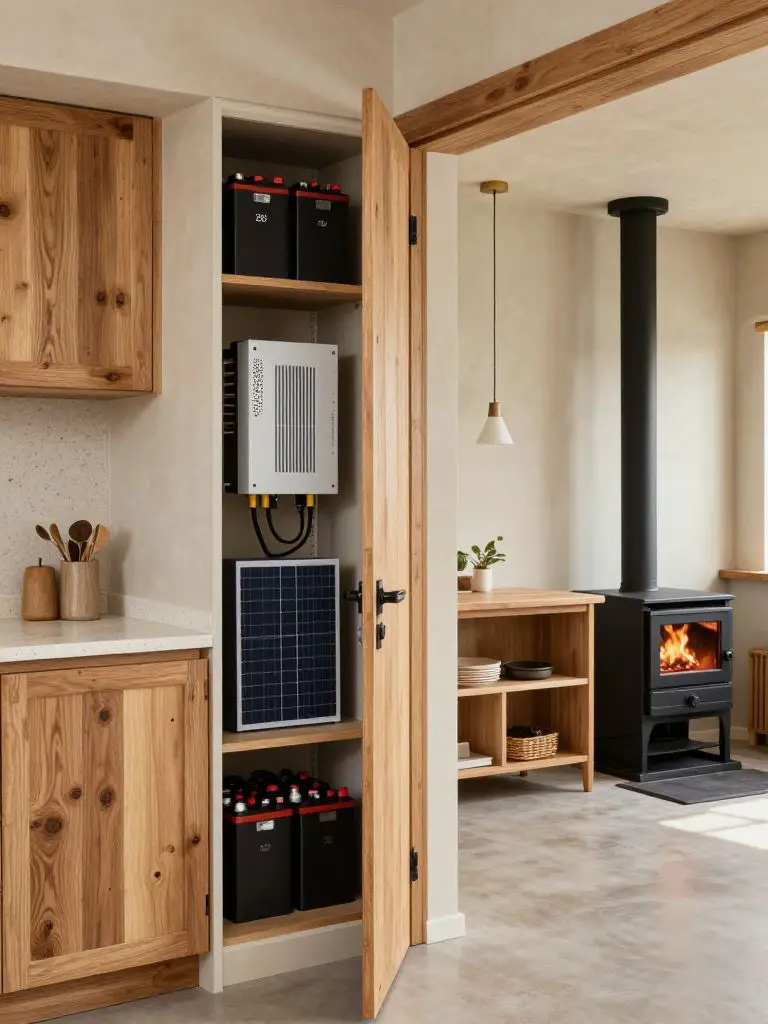
If you have the space, dedicating an entire closet to your power system is a game-changer. This keeps batteries, inverters, charge controllers, and all wiring completely separate from your cooking and food prep areas. Safety and organization both improve dramatically.
A utility closet also makes maintenance easier. You can access everything without moving kitchen items or crawling under counters. Install a small ventilation fan to prevent heat buildup, especially if you’re using lead-acid batteries that off-gas.
This setup works particularly well for larger homestead kitchen designs where you’re running multiple appliances. You can expand your system over time without reconfiguring your entire kitchen layout.
6. Rainwater-Fed Sink Setup with Gravity Plumbing
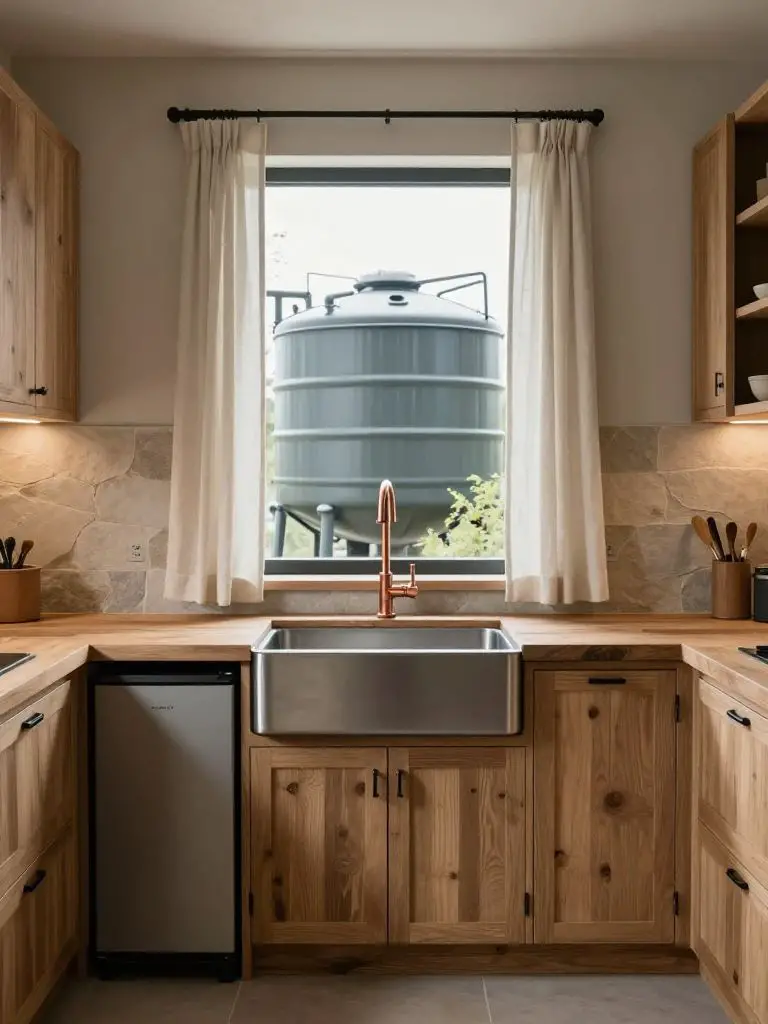
Now we’re talking about water independence, not just power. A rainwater collection system with gravity-fed plumbing eliminates the need for electric pumps entirely. Position your storage tank higher than your sink, and physics does the rest.
This design requires thoughtful placement during the building phase, but the payoff is huge. No pump noise, no electricity consumption, and genuinely free water for washing dishes and prepping food. Add a simple filtration system for peace of mind.
I’ve seen this paired beautifully with unfitted kitchen ideas where the sink sits in a standalone cabinet. It gives you flexibility in positioning and makes the plumbing runs simpler.
7. Minimal Energy Kitchen with LED Lighting and Manual Tools
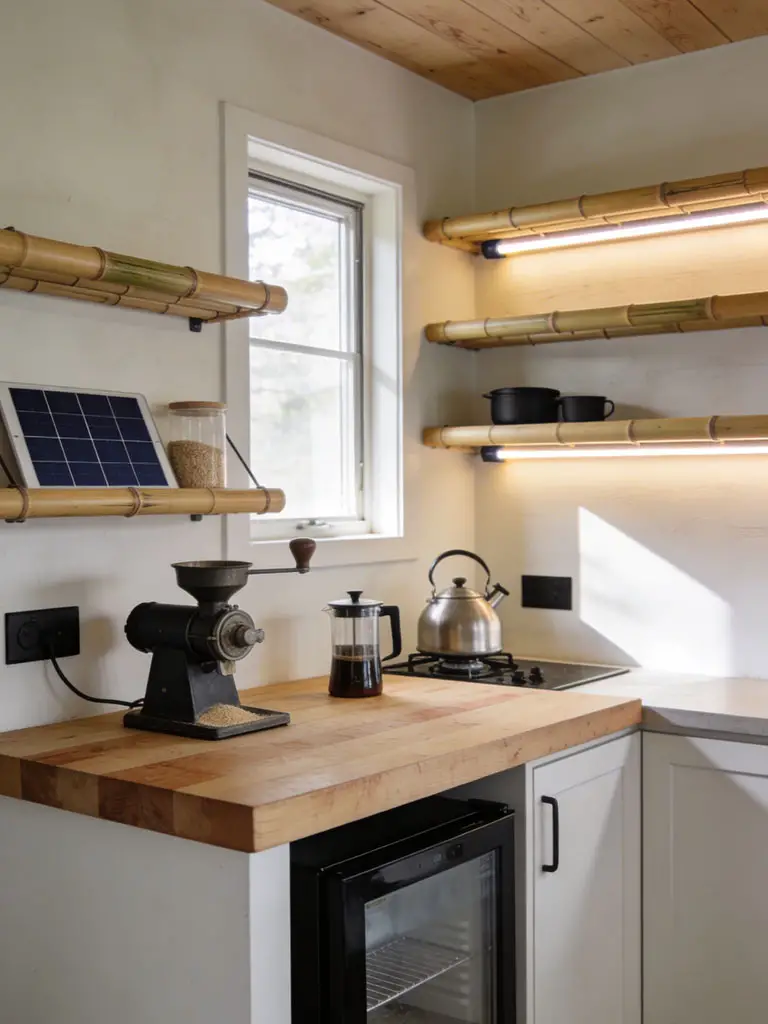
Sometimes less really is more. This design embraces hand-powered tools and appliances, reducing your electrical needs to just LED lighting. Manual coffee grinders, hand mixers, and good old-fashioned knives replace their electric counterparts.
You’d be surprised how little you miss electric gadgets once you adjust. A quality hand-crank grain mill, manual can opener, and French press coffee maker handle most tasks just fine. Your solar setup can be tiny and inexpensive since you’re only powering lights.
This approach also forces you to slow down and be more intentional with food prep, which I’ve found actually improves the cooking experience. Plus, these manual tools never break down or need software updates.
8. Outdoor Kitchen with Ground-Mounted Solar Array
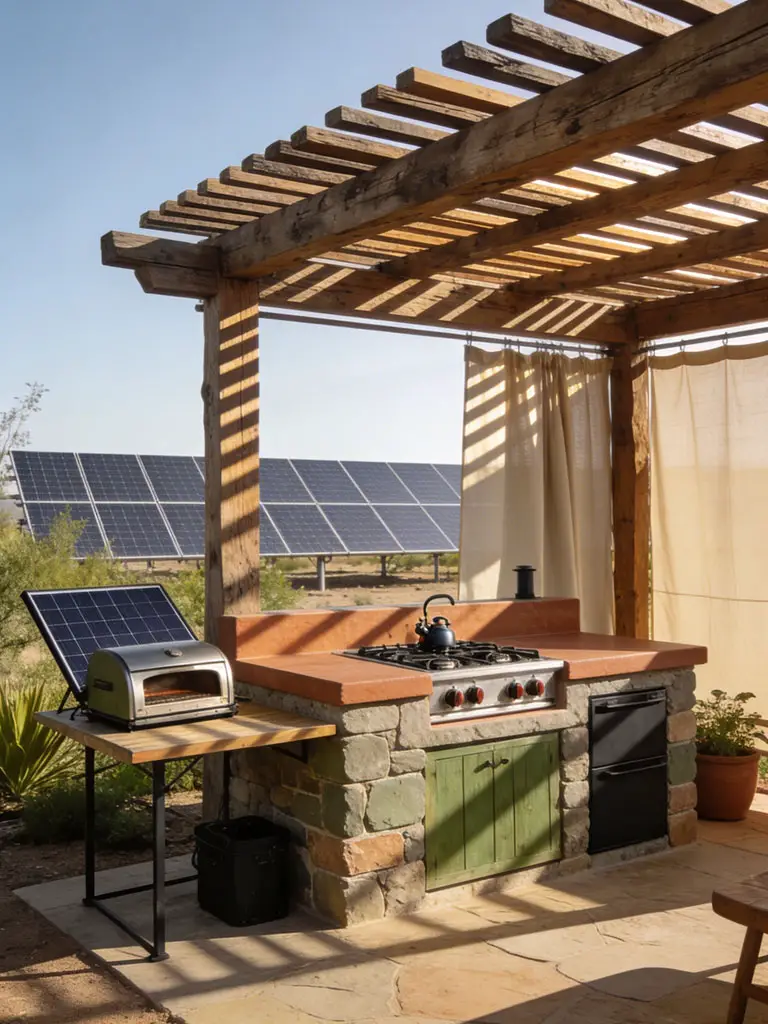
Taking your kitchen outside opens up incredible possibilities. A ground-mounted solar array can sit right next to your cooking area, making wiring simple and maintenance accessible. No climbing on roofs to clean panels or check connections.
Outdoor kitchens work brilliantly in temperate climates or as seasonal cooking spaces. You get natural ventilation, which matters when you’re grilling or using propane burners. Build a roof over the cooking area but leave the sides open for airflow.
The ground-mount also lets you adjust panel angle seasonally for maximum efficiency. That’s harder to do with roof installations. Just make sure your battery bank stays protected from temperature extremes.
9. Cabin Kitchen with Combined Wood Stove and Solar Backup
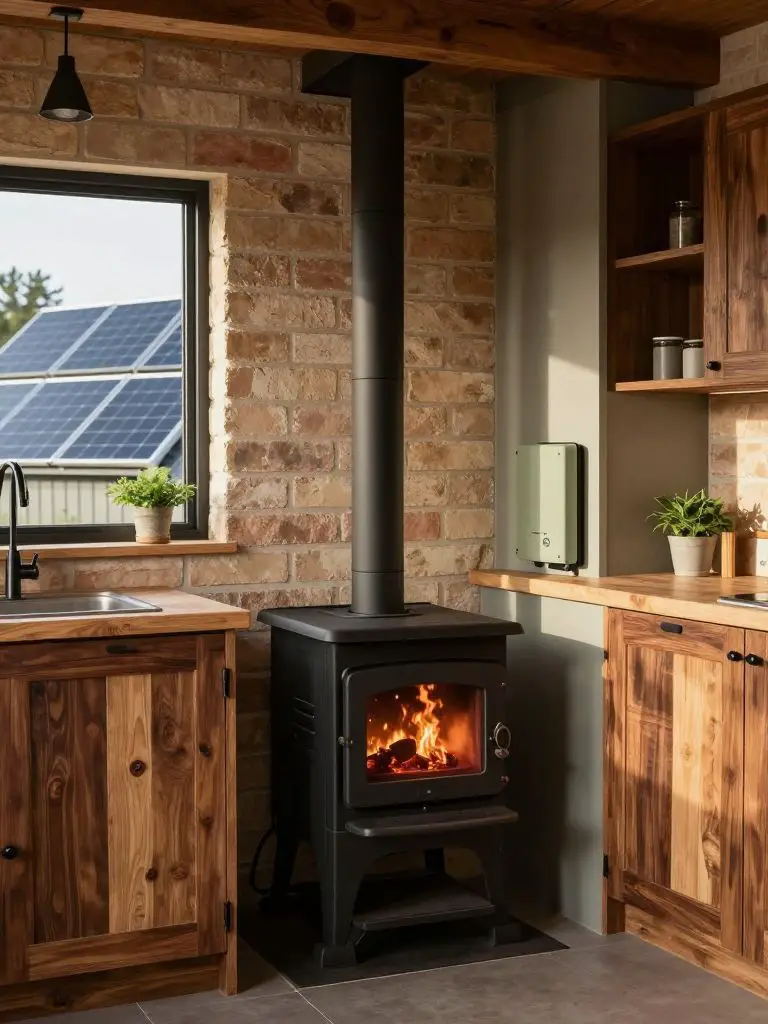
This hybrid approach gives you redundancy, which is smart planning for any off-grid setup. Your wood stove handles cooking and heating during cold months, while solar panels power a small electric cooktop and appliances when you don’t want to fire up the stove.
Small cabin kitchens especially benefit from this flexibility. Summer cooking with a wood stove can make your space uncomfortably hot, so having a solar-powered induction burner as backup is clutch. You’re not locked into one cooking method regardless of season or weather.
This design also means you’re never completely without cooking ability. If your solar system needs maintenance, you have the wood stove. If you run out of firewood, you have electric backup. That peace of mind is worth the extra setup cost.
10. Backyard Off-Grid Kitchen with Hybrid Solar and Propane Setup
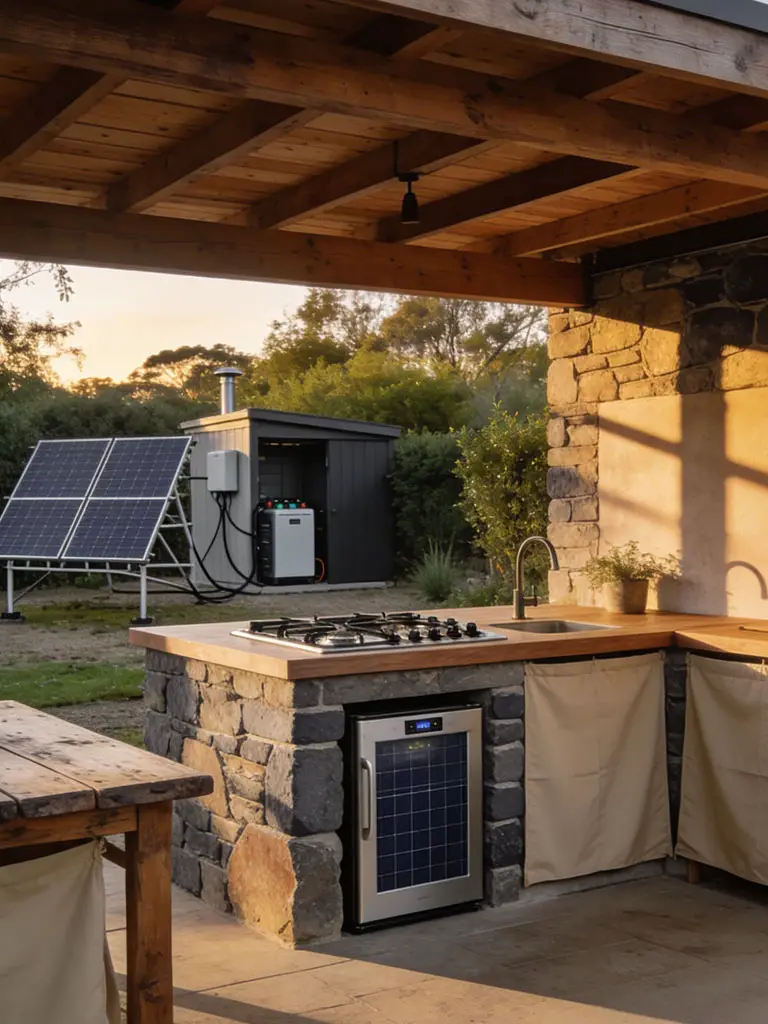
You don’t have to live off-grid full-time to benefit from these designs. A backyard kitchen with solar panels and propane appliances gives you a self-sufficient cooking space that doesn’t add to your home’s electric bill. This setup is perfect for frequent outdoor entertaining or as an emergency backup kitchen.
Combine a propane grill or cooktop with a solar-powered mini-fridge and LED string lights, and you’ve got a fully functional outdoor cooking area. Add a small battery bank to keep drinks cold overnight and charge phones during backyard gatherings.
I particularly like this option for people who want to test off-grid systems before committing to a full home conversion. You learn what works, what doesn’t, and what your actual energy needs are in a low-stakes environment.
Creating an off-grid kitchen isn’t about deprivation—it’s about intentional design that prioritizes both sustainability and livability. Whether you’re building a remote cabin or just want more independence from utility companies, these ten designs show that you can have a beautiful, functional kitchen without being tied to the grid. Start with the setup that matches your climate, budget, and cooking style, then adjust as you learn what works best for your specific situation. Your perfect off-grid kitchen is absolutely achievable.