
If you’ve ever thought minimalism feels cold, you haven’t seen what happens when Swedish interior design meets Japanese sensibility. The blend of these two aesthetics creates spaces that are clean and calm, but also surprisingly warm and inviting. I’m talking soft textures, natural wood tones, and that perfect balance between “less is more” and “this feels like home.”
The japandi interior design style has become wildly popular for good reason. It takes the best parts of Scandinavian coziness and Japanese craftsmanship and turns them into something that actually works in real life. No sterile showrooms here—just thoughtful, livable spaces that make you want to kick off your shoes and stay awhile.
Ready to see how this fusion can transform your home? Here are 17 ideas that prove minimalist doesn’t have to mean cold.
1. Low-Profile Japandi Bedroom with Soft Linen Layers
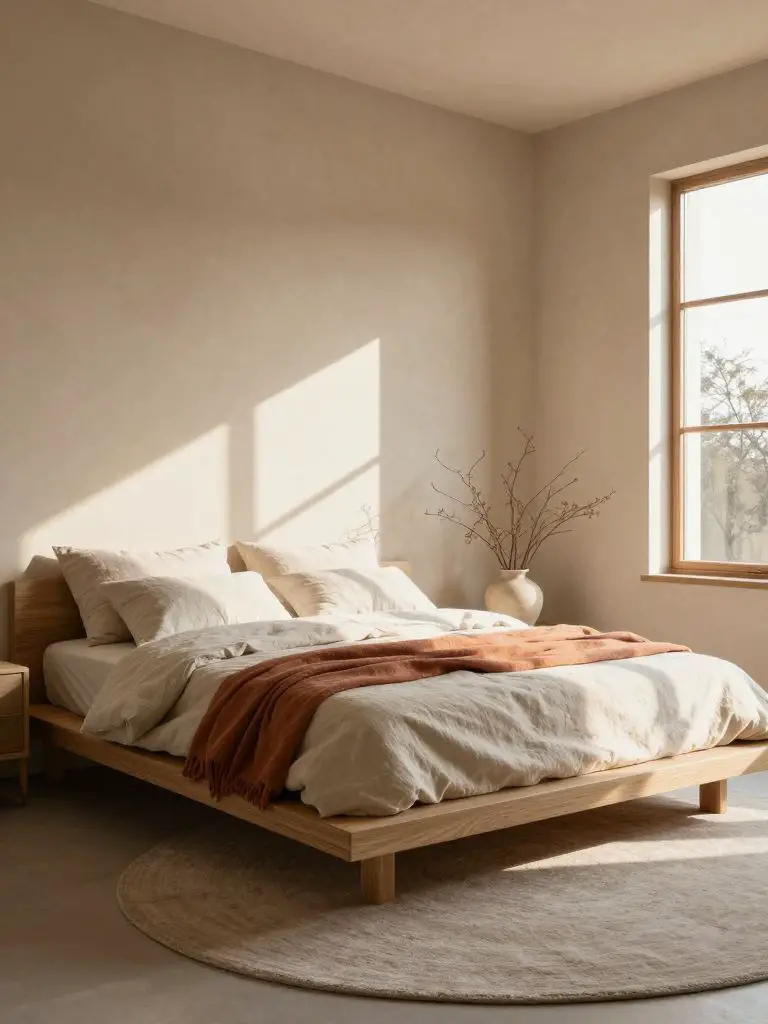
A low platform bed is the foundation of this look, and it instantly makes your bedroom feel more grounded and peaceful. Pair it with linen bedding in warm neutrals like oatmeal, sand, or soft grey. The key is layering different textures without adding visual clutter.
I love how this setup encourages you to slow down. The lower sightlines create a sense of calm, while the natural linen adds just enough warmth to keep things cozy. Add a simple wooden side table and a ceramic lamp, and you’re done.
2. Minimalist Wood Beam Bedroom with Zen-Inspired Simplicity
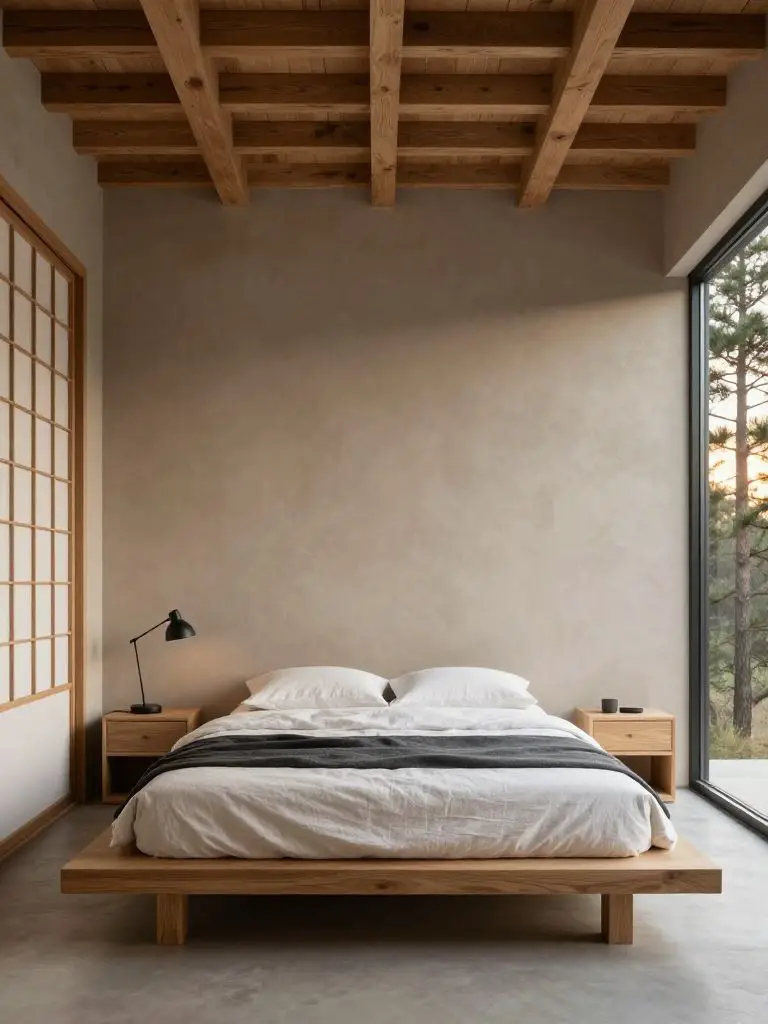
Exposed wood beams bring architectural interest without overwhelming the space. Choose light-toned wood like ash or birch to keep the room feeling airy. This works especially well in bedrooms where you want that restful, almost meditative vibe.
Keep everything else simple—white walls, minimal furniture, maybe a single piece of black-and-white art. The beams do all the talking, and honestly, that’s exactly how it should be in a japandi minimalist interior.
3. Sculptural Wood Accent Wall in a Serene Japandi Suite
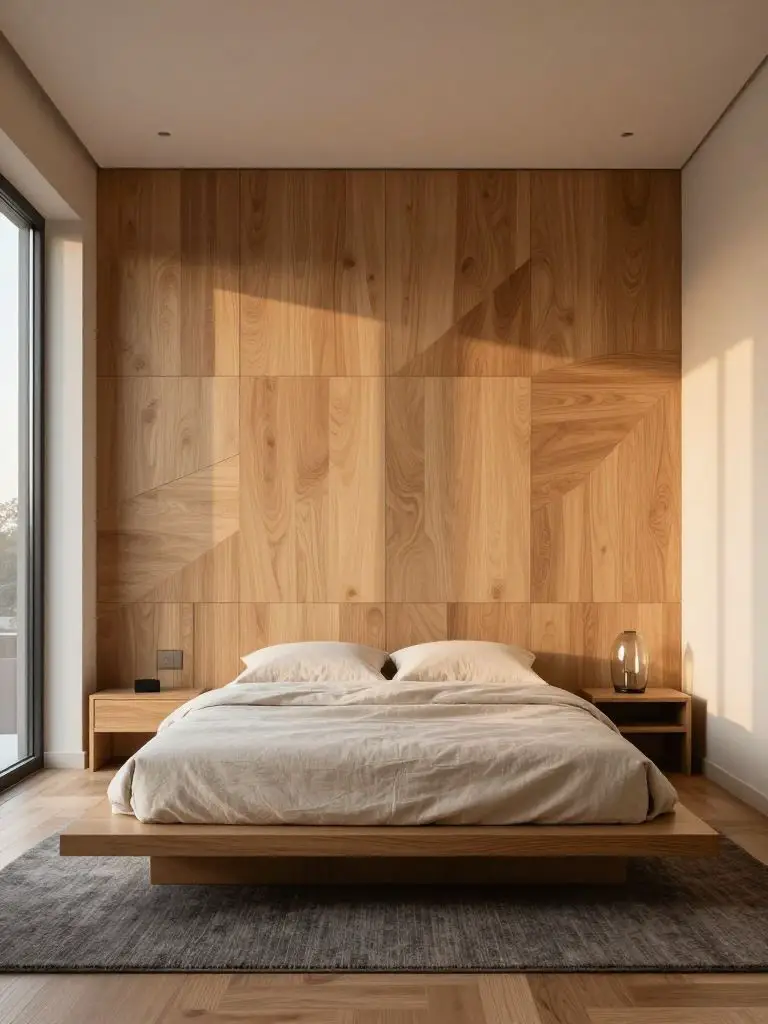
A sculptural wood wall adds dimension and warmth without needing color or pattern. Think vertical slats, 3D geometric panels, or even a simple shiplap in natural oak. It becomes a focal point that still feels understated.
This is one of my favorite ways to add personality to a neutral room. The wood grain brings in organic texture, and the sculptural element gives you that artisan quality Japanese design is known for.
4. Japandi Entry Console with Organic Ceramics and Art
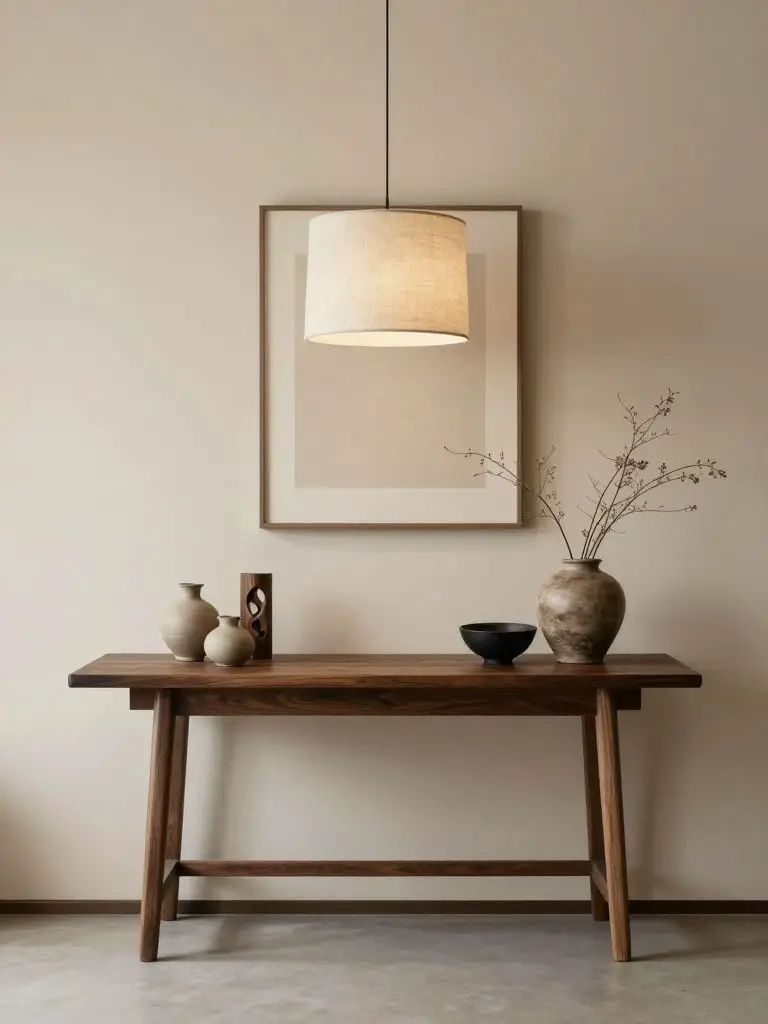
Your entryway sets the tone for the whole home, so keep it intentional. A slim wooden console in walnut or teak works beautifully. Style it with a couple of handmade ceramic vases, a piece of abstract art, and maybe a small tray for keys.
Less is definitely more here. The goal is to create a moment of beauty that doesn’t demand attention—it just quietly welcomes you home.
5. Scandinavian-Japanese Home Office with Natural Textures
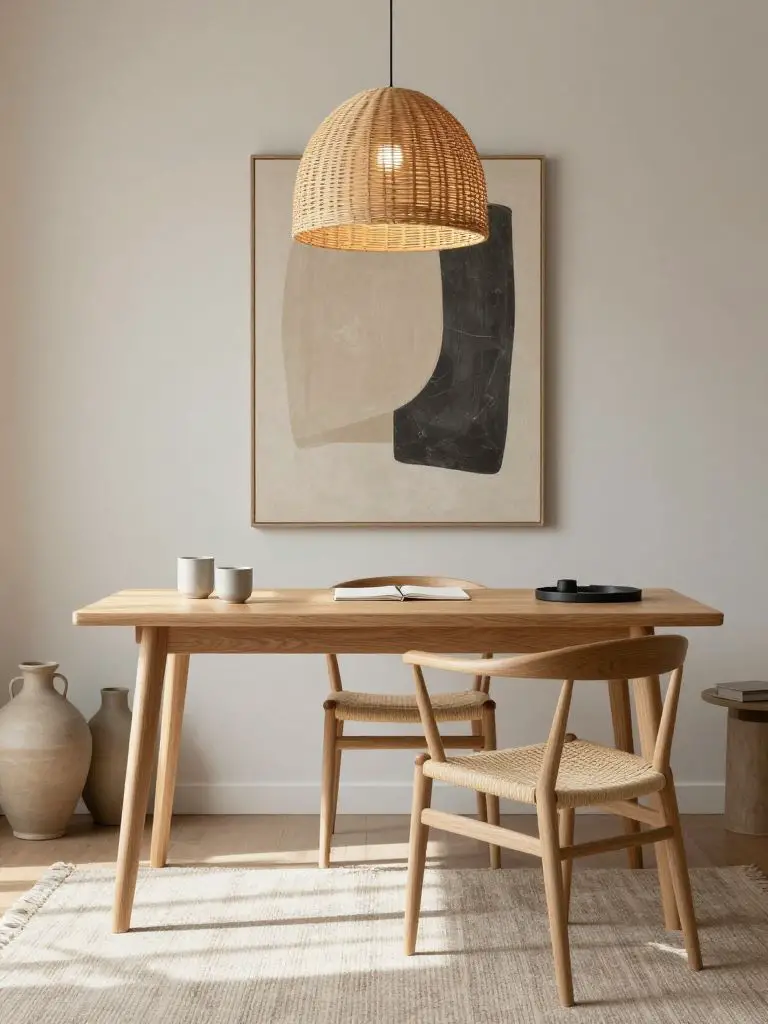
A home office in this style is all about focus and calm. Start with a simple wooden desk, add a woven chair or one with a linen cushion, and bring in natural light wherever possible. A small plant or two doesn’t hurt either.
The magic happens when you combine smooth surfaces with textured accents. A jute rug underfoot, a wool throw over the chair, a ceramic pen holder—these small touches make the space feel human, not corporate.
6. Neutral Japandi Living Room with Low Oak Table
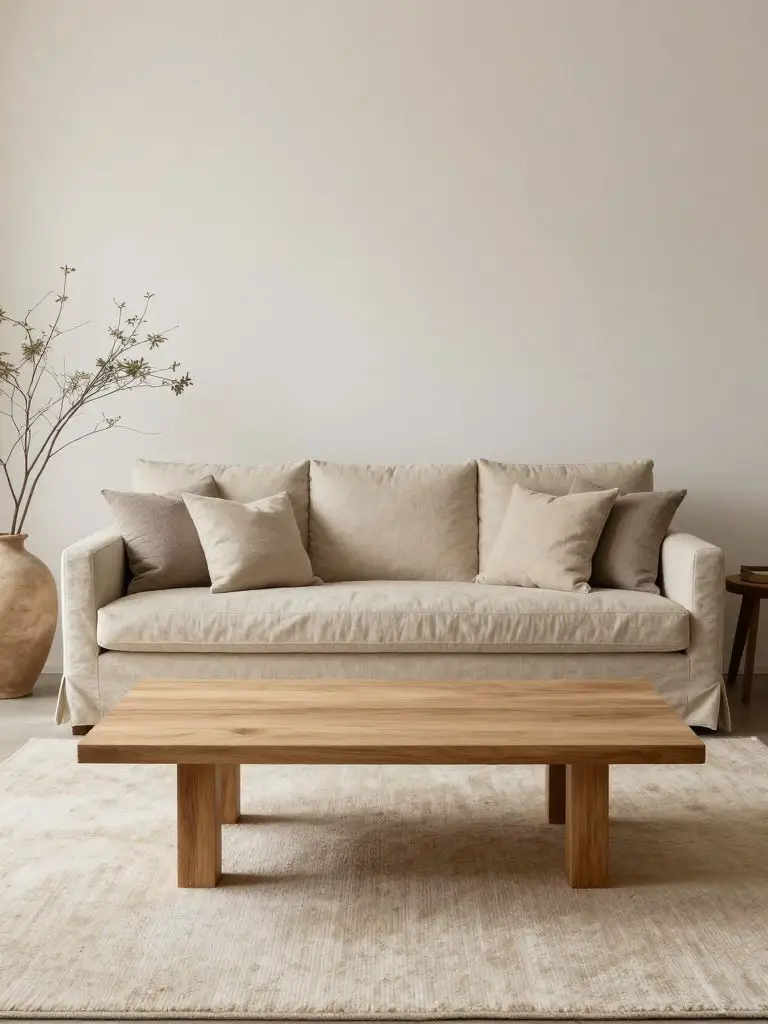
A low oak coffee table anchors the room and encourages a more relaxed, floor-level lifestyle. Surround it with a neutral sofa, linen cushions, and maybe a low-slung lounge chair. Stick to a palette of beige, cream, charcoal, and warm wood.
This setup is perfect for anyone who wants a living room that feels effortlessly put together. It’s the kind of space where you can actually relax, not just stage photos.
7. Scandinavian Japanese Kitchen with Warm Wood Cabinetry
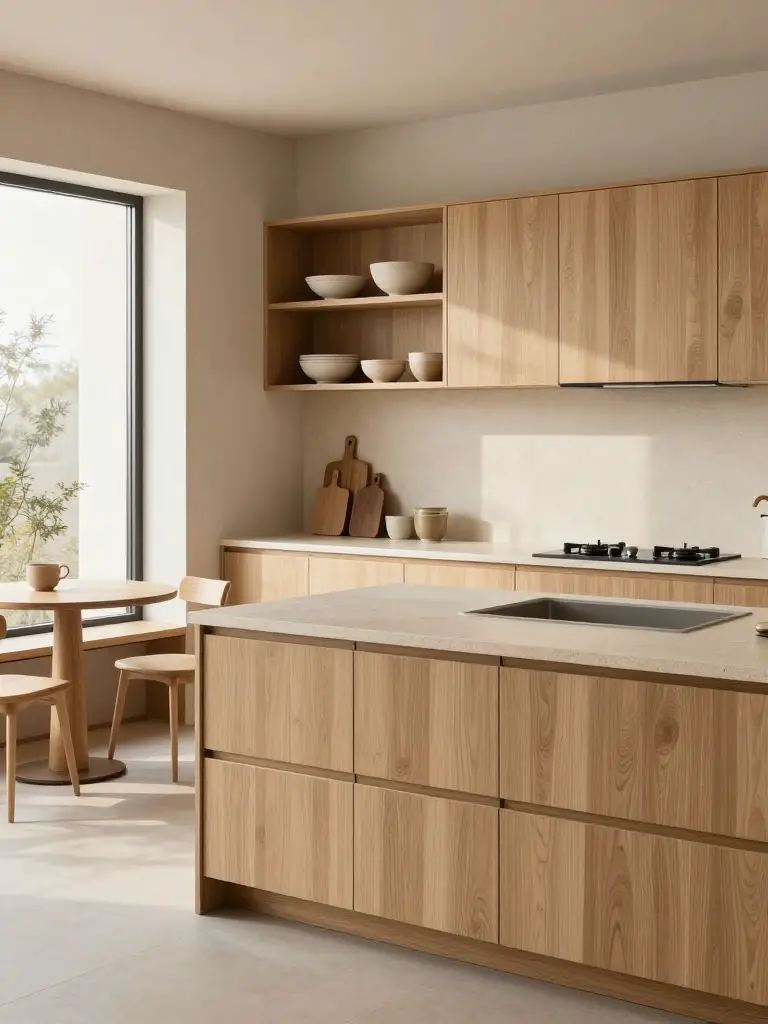
Warm wood cabinetry—think light oak or maple—brings instant coziness to a kitchen. Pair it with white or pale grey countertops and simple matte black hardware. Open shelving in the same wood tone keeps things airy and accessible.
This is where the Japan Scandinavian interior philosophy really shines. Everything has a place, nothing is overdone, and the warmth comes from the materials themselves.
8. Light-Filled Japandi Dining Room with Paper Lantern Pendants
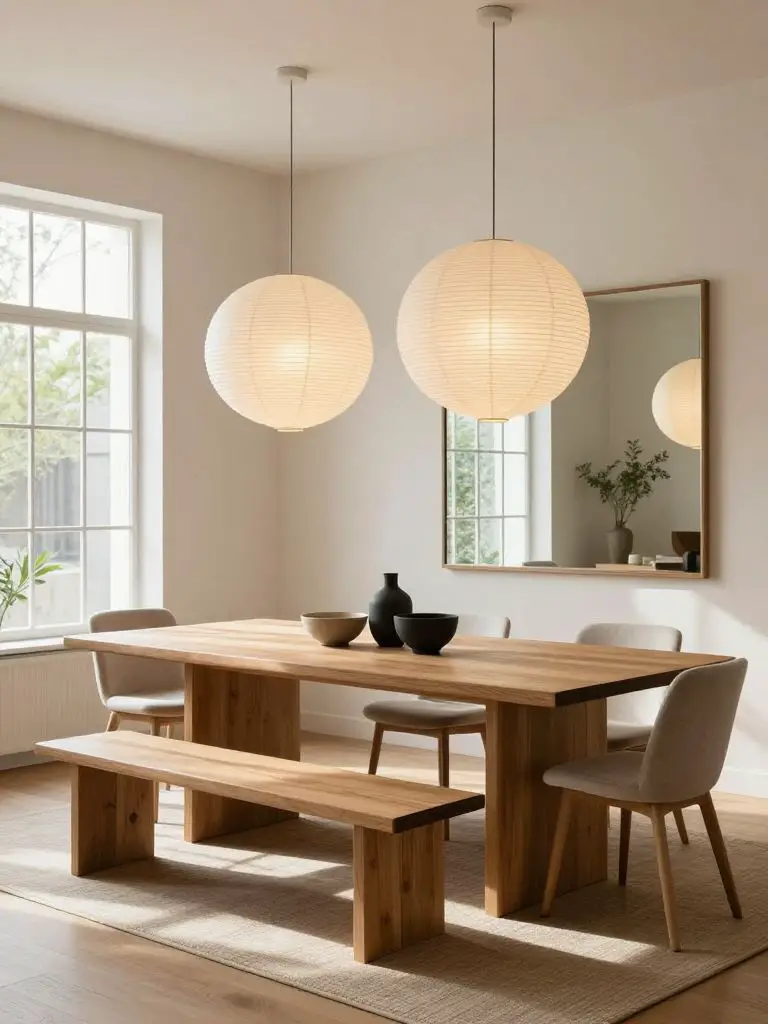
Paper lantern pendants are a classic Japanese element that diffuses light beautifully. Hang them over a simple wooden dining table surrounded by streamlined chairs. The soft glow creates an intimate, welcoming atmosphere.
I’m obsessed with how this look balances function and beauty. The lighting is practical, but it also adds a sculptural, almost poetic quality to the room.
9. Minimal Scandinavian Kitchen with Soft Beige Palette
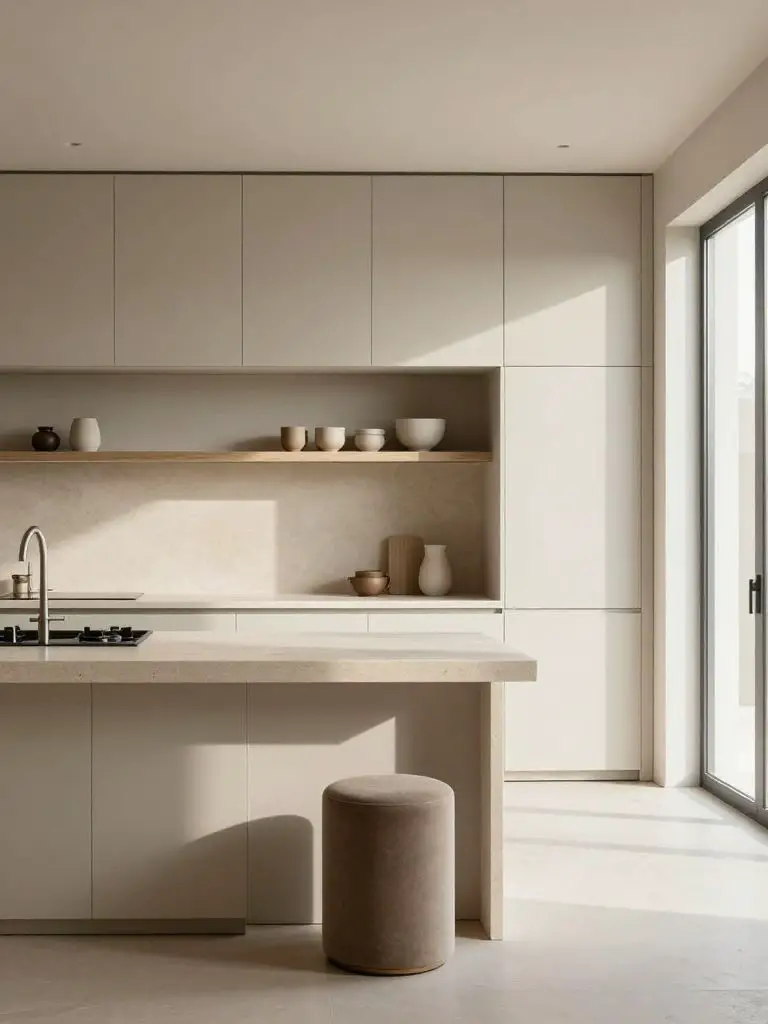
A soft beige palette makes a kitchen feel warm and inviting without sacrificing the clean lines of Scandinavian design. Use beige-toned tiles, warm white cabinets, and natural wood accents. Keep countertops clear and clutter-free.
This is the kind of kitchen that feels serene even when you’re cooking a big meal. Everything is calm, organized, and just a little bit luxurious in its simplicity.
10. Double-Height Scandinavian Japanese Living Room with Forest Views
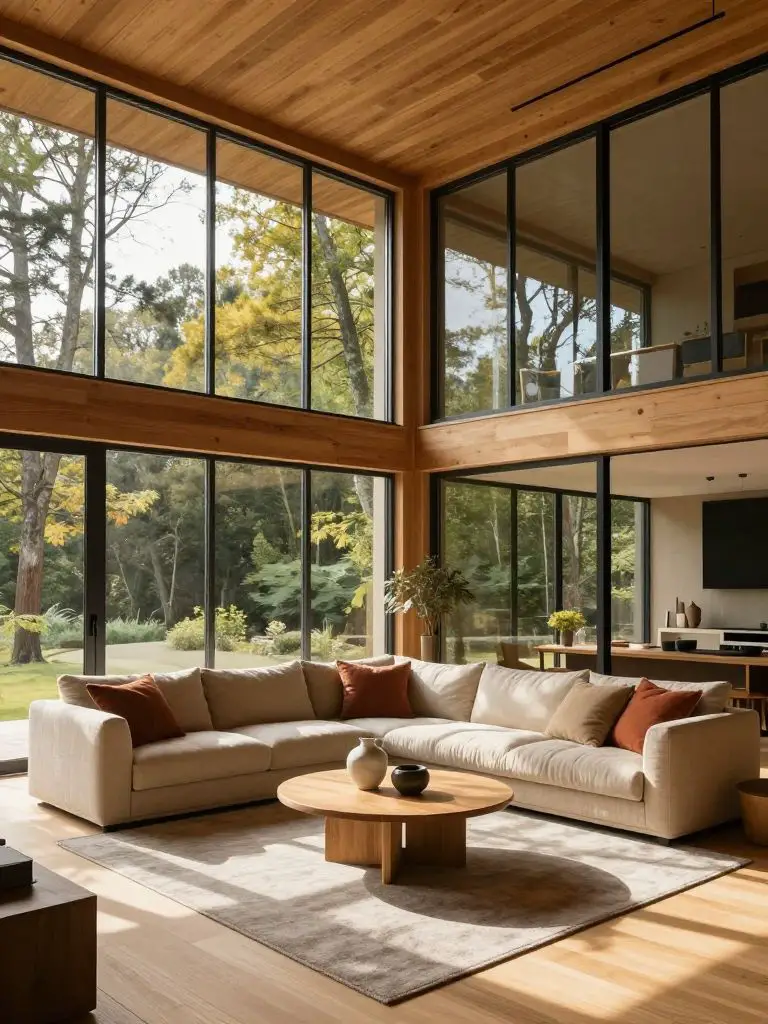
If you’re lucky enough to have high ceilings and a view, lean into it. Keep furniture low and minimal so the architecture and nature become the main event. Use natural materials like stone, wood, and linen to echo the outdoors.
This style is all about blurring the line between inside and out. It’s ambitious, but when done right, it’s absolutely breathtaking.
11. Japandi Coffee Table Styling with Ceramics and Linen
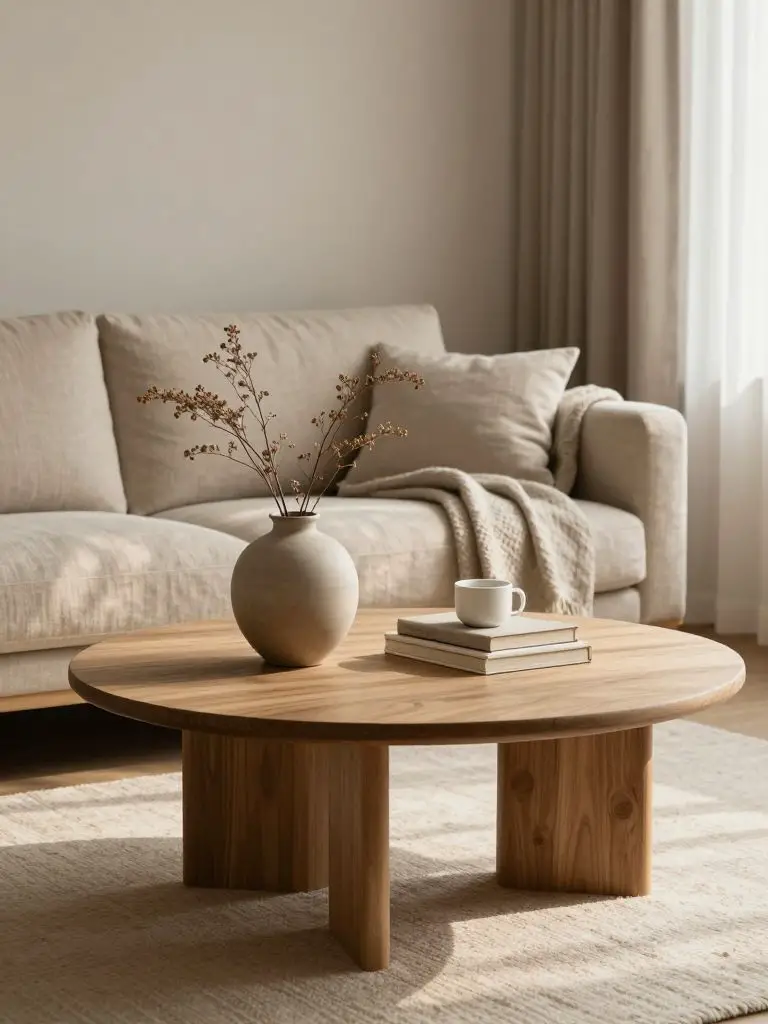
Coffee table styling in this aesthetic is an art form. Start with a textured linen runner or placemat. Add a handmade ceramic bowl, a small vase with a single stem, and maybe a beautiful art book. That’s it.
The restraint is what makes it work. Each item should feel intentional, like it earned its spot on the table.
12. Minimalist Spa-Inspired Japandi Bathroom
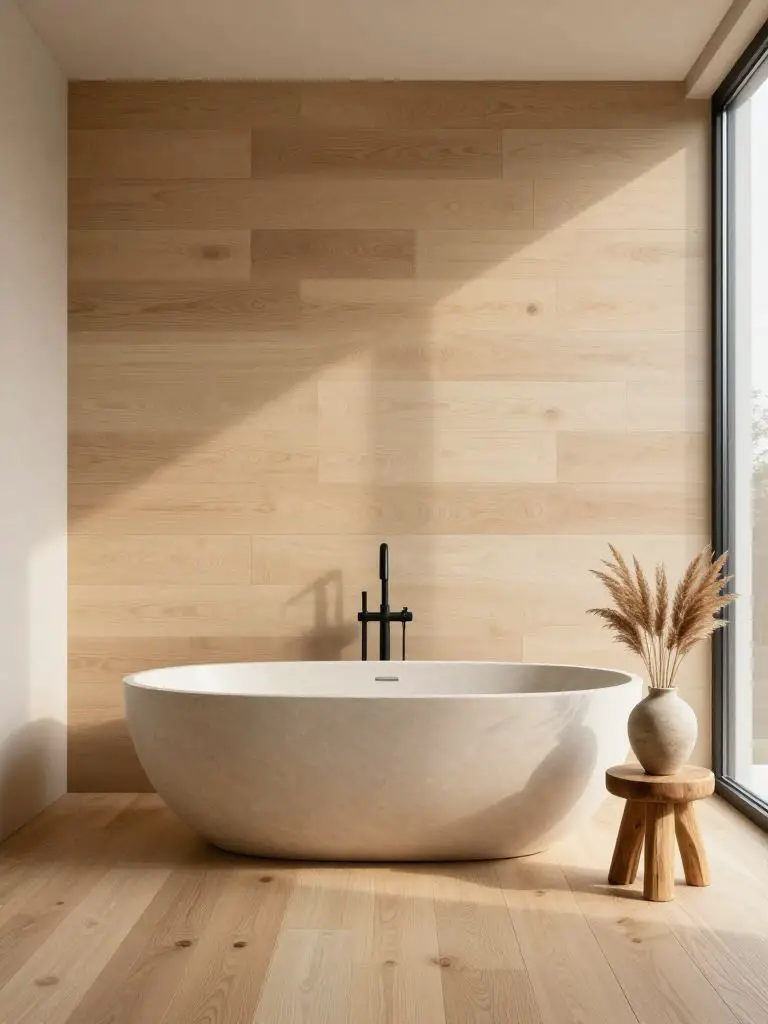
Think natural stone, light wood, and soft whites. A freestanding tub, a rain showerhead, and a simple wooden stool for your towels. Add a bamboo mat and some greenery, and you’ve got a spa bathroom that feels like a retreat.
This is one of the easiest rooms to translate into the japandi interior design style. Bathrooms naturally lend themselves to minimalism, and adding warmth is just a matter of choosing the right materials.
13. Sunlit Japandi Platform Bedroom with Concrete Walls
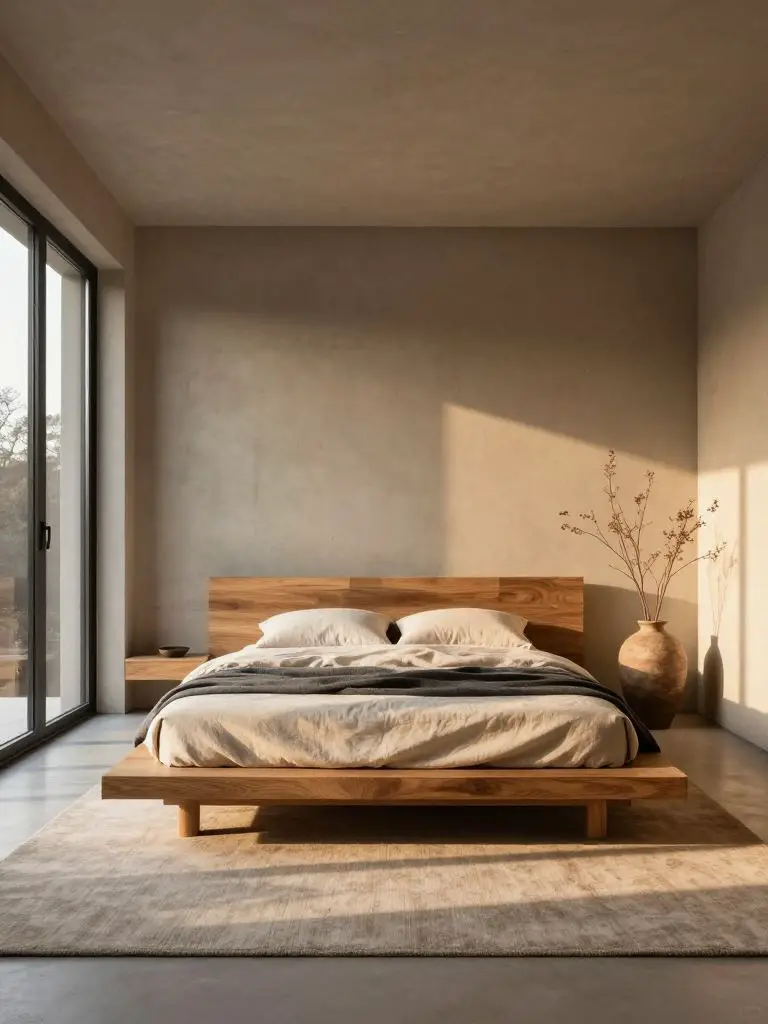
Concrete walls might sound cold, but paired with a low wooden platform bed and soft textiles, they create a striking contrast. The rawness of the concrete plays beautifully against the warmth of linen and wool.
This look is a bit edgier, but it still feels grounded and calm. It’s perfect if you want something modern with a little more personality.
14. Scandinavian Japanese Kitchen with Integrated Island Seating
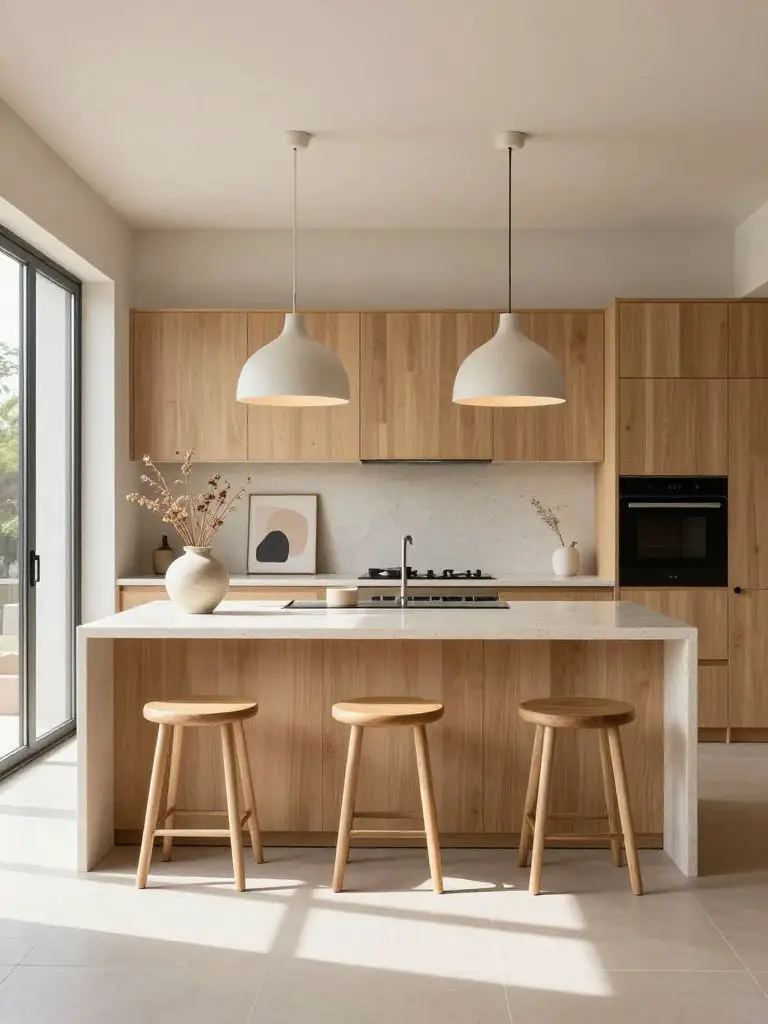
An integrated island with built-in seating keeps the kitchen open and social. Use the same wood tone for the island as the rest of the cabinetry, and add simple stools with linen cushions or woven seats.
This setup encourages connection without cluttering the space. It’s functional, beautiful, and feels like the heart of the home.
15. Warm Ambient Japandi Lighting Corner
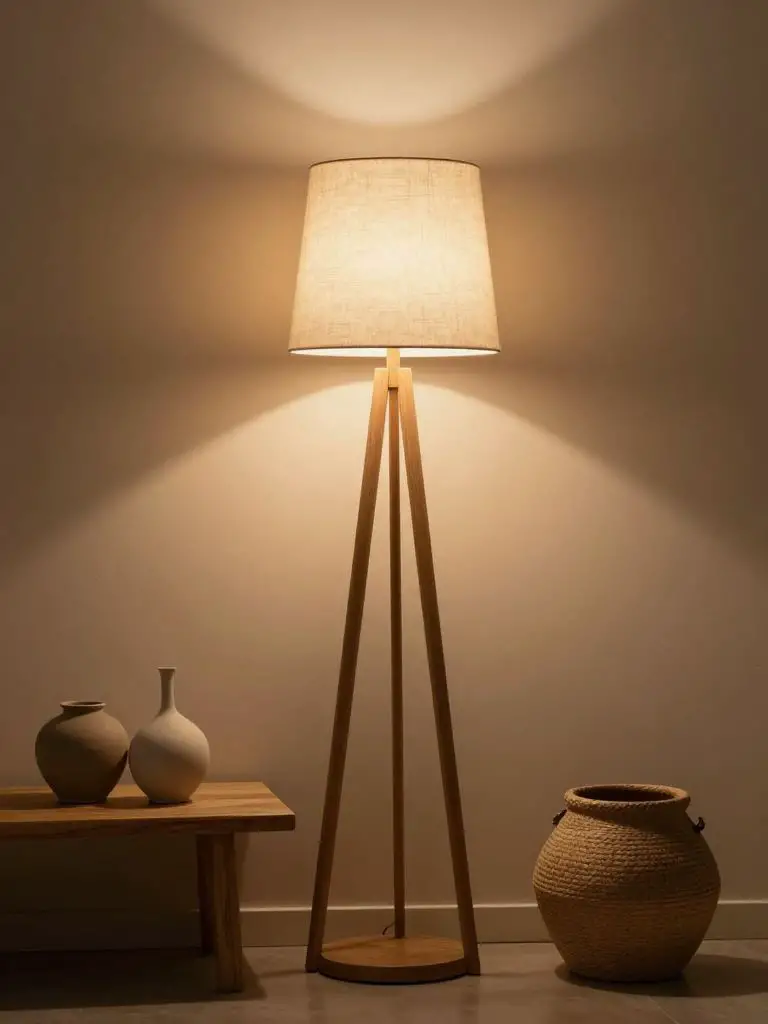
Create a cozy corner with layered lighting—a floor lamp with a linen shade, a small table lamp, maybe a candle or two. Use warm LED bulbs to keep the glow soft and inviting.
Lighting is one of the most underrated elements of warm design. Get it right, and even the most minimal space will feel like a hug.
16. Moody Japanese-Inspired Art Wall with Soft Accent Lighting
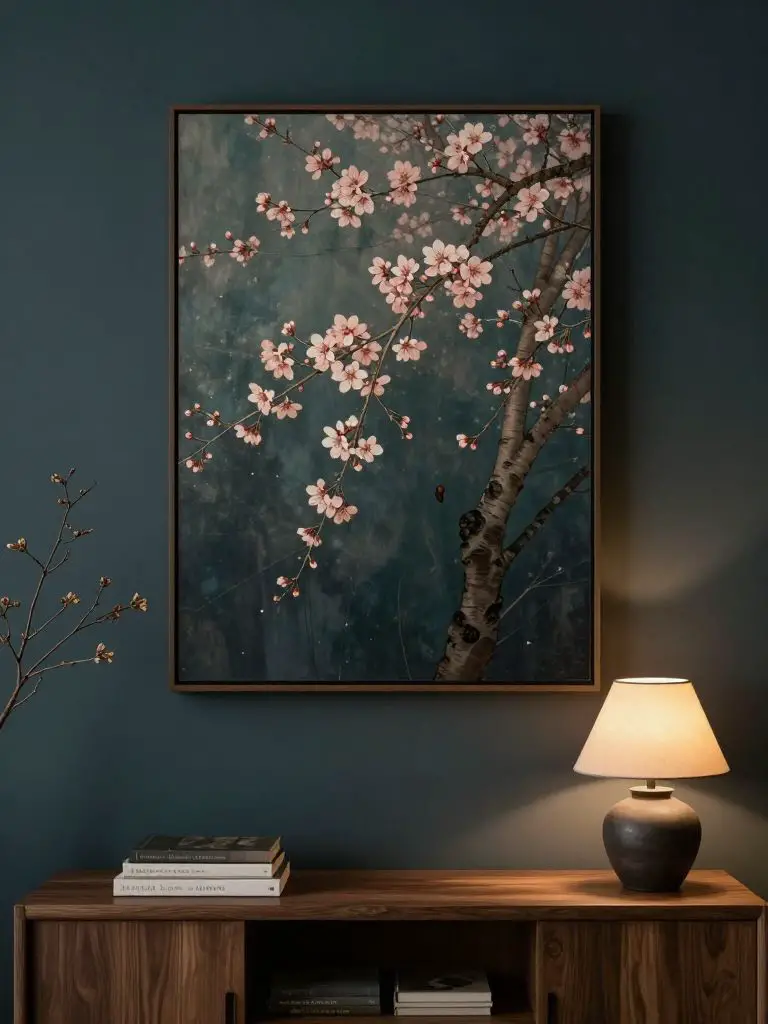
A moody art wall can add depth and drama while staying true to minimalist principles. Choose a few pieces of Japanese-inspired art—ink paintings, woodblock prints, or abstract calligraphy. Light them with subtle picture lights or wall sconces.
This is where you can get a little emotional with your design. Art brings soul to a space, and the right lighting makes it unforgettable.
17. Earth-Toned Scandinavian Japanese Writing Nook
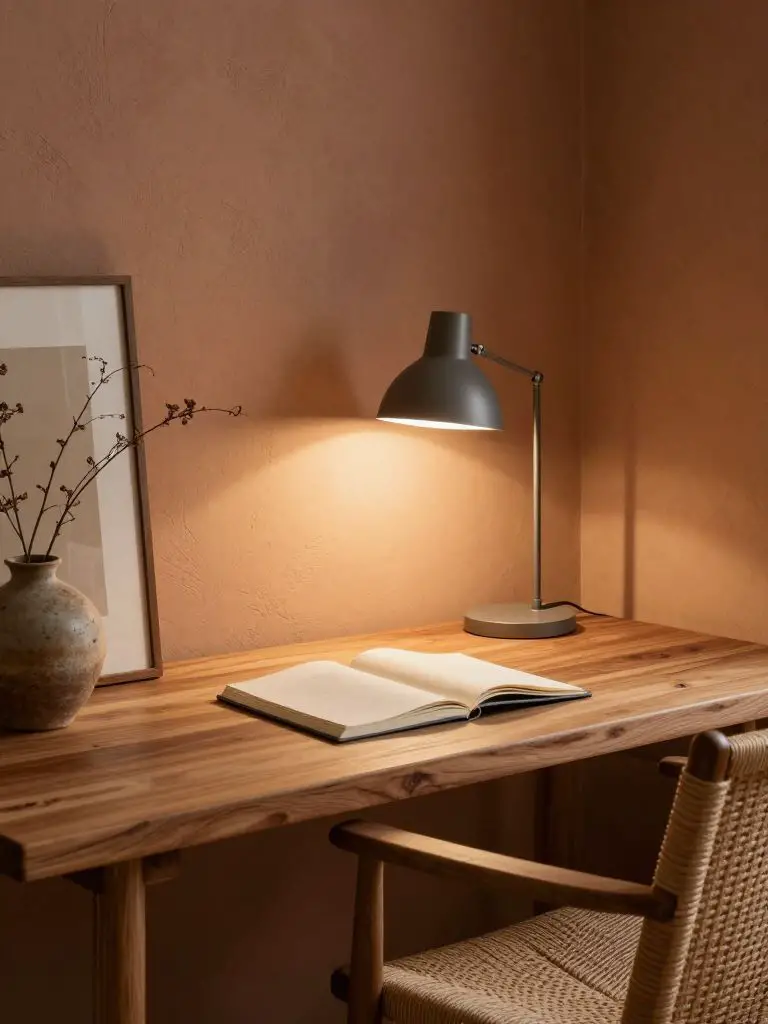
A small writing nook with a simple desk, a comfortable chair, and a warm earth-toned palette is pure bliss. Use terracotta, ochre, or warm taupe alongside natural wood and white.
This is the kind of space that invites creativity and calm. It’s personal, intimate, and perfectly imperfect—just like the best Japandi spaces.
Whether you’re drawn to the clean lines of Swedish interior design or the artisan quality of Japanese craftsmanship, blending the two gives you the best of both worlds. These 17 ideas prove that minimalism can be warm, inviting, and deeply personal. Start with one room, one idea, or even one corner—and see how the rest unfolds. Your home will thank you.